Video - The Human Archive

Video within The Human Archive records the lived conditions through which identity, relationships, memory, and authorship become visible over time. Rather than illustrating ideas, these works preserve moments that continue to reorganize through return, repetition, and duration.

Some unfold through narrative.

Others through gesture, atmosphere, or sustained observation.

Each work begins with a Data Frame recording the conditions under which it was created. Viewers are invited to encounter the work at their own pace, allowing meaning to emerge through attention rather than explanation.

The videos do not resolve experience.

They allow it to unfold.

Meaning is not assigned.

It is recognized.

The James Bond Theme (from 'SPECTRE')"
Thomas Newman
Skip to Videos
  • My Stuff Thumbnail.jpg

    My Stuff

    Video work — narrative output

    My Stuff began as a workplace assignment but became an early experiment in narrative output through movement, location, and self-documentation.

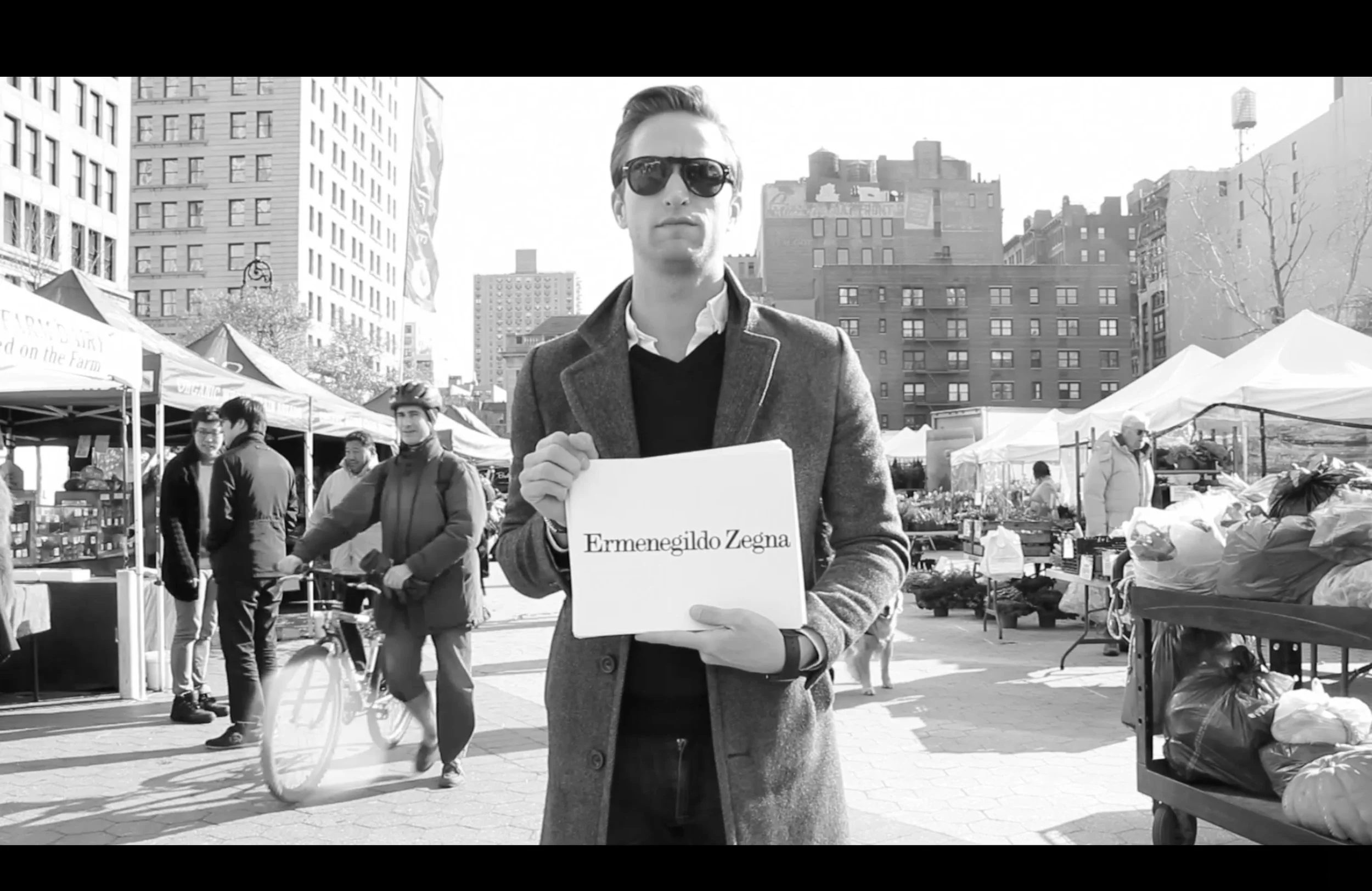
    The format originates from the Vanity Fair column of the same name. Employees at Ermenegildo Zegna’s corporate offices were periodically featured on the company intranet through a written transcript of short questions and answers describing personal preferences, habits, and tastes.

    Rather than submitting written responses, I proposed translating the format into video.

    Each question and answer was written onto individual cards and filmed sequentially across New York City. I carried the cards with me and recorded them one by one in different locations, allowing the environment to shift with each prompt. Some locations relate directly to the question being asked. Others do not.

    This movement transforms a static questionnaire into a narrative structure. The viewer experiences the answers not as a fixed transcript, but as a series of moments unfolding across the city.

    Within the broader Ezra system, My Stuff can be understood retrospectively as an early form of narrative output—a structured response translated into lived context rather than text alone.

    The questions remain constant.

    The environment changes.

    Meaning emerges through sequence, location, and movement.

    Credits

    Written by Seth Dager

    Directed by Seth Dager

    Edited by Seth Dager

    Performed by Seth Dager

  • Les Fausses Coincidences Thumbnail.jpg

    Les Fausses Coincidences

    Short film — fictional narrative output

    Les Fausses Coïncidences is a six-minute French-language short film written and performed by Seth Dager and Emmanuel Libet. The film was created in the summer of 2012 in Dager’s apartment on Central Park North in New York City as a birthday gift for their friend Amaury, who was celebrating his thirtieth birthday in Paris.

    The film unfolds as a semi-fictional phone conversation between Dager and Libet. During the call, the two recount a series of strange coincidences that occurred throughout the day—moments in which each unexpectedly encountered something that reminded them of Amaury.

    What begins as casual storytelling quickly becomes absurd.

    Both men become convinced that they separately saw Amaury’s favorite actress, Catherine Deneuve, earlier that day. Each recounts the encounter with complete sincerity. Yet the stories contradict each other in subtle ways, and in the dramatized vignettes that accompany the conversation the two friends quietly exchange roles within each other’s memories.

    The coincidences multiply.

    The certainty remains.

    The structure of the film plays with the boundary between recollection and invention. Real traits and habits of Amaury are woven throughout the dialogue, while the events themselves drift further from reality with each retelling.

    The final sequence reveals the framing device: the entire conversation has occurred within a dream. The two men wake in the same apartment after having independently experienced the same strange chain of events. Still uncertain what was real and what was imagined, they decide to remain home that evening and watch a Catherine Deneuve film together—mirroring the decision made during the phone call inside the dream.

    After the credits, the narrative dissolves completely. The actors appear out of character to wish Amaury a happy birthday as “Dream a Little Dream of Me” by Mama Cass closes the film.

    Within the broader Ezra practice, Les Fausses Coïncidences can be understood retrospectively as an early narrative experiment in fictional mode. The film uses real relationships and recognizable details but intentionally rearranges them into an invented sequence of events. Truth remains present in fragments, while the narrative itself becomes playful, ironic, and deliberately unreliable.

    The result is not a record of what happened, but a small cinematic construction built from friendship, memory, and coincidence.

    Credits

    Written by Seth Dager & Emmanuel Libet

    Directed by Seth Dager

    Edited by Seth Dager

    Performed by Seth Dager & Emmanuel Libet
  • Hoizons Doré Thumbnail.jpg

    Horizons Dorés

    Short film — durational narrative output

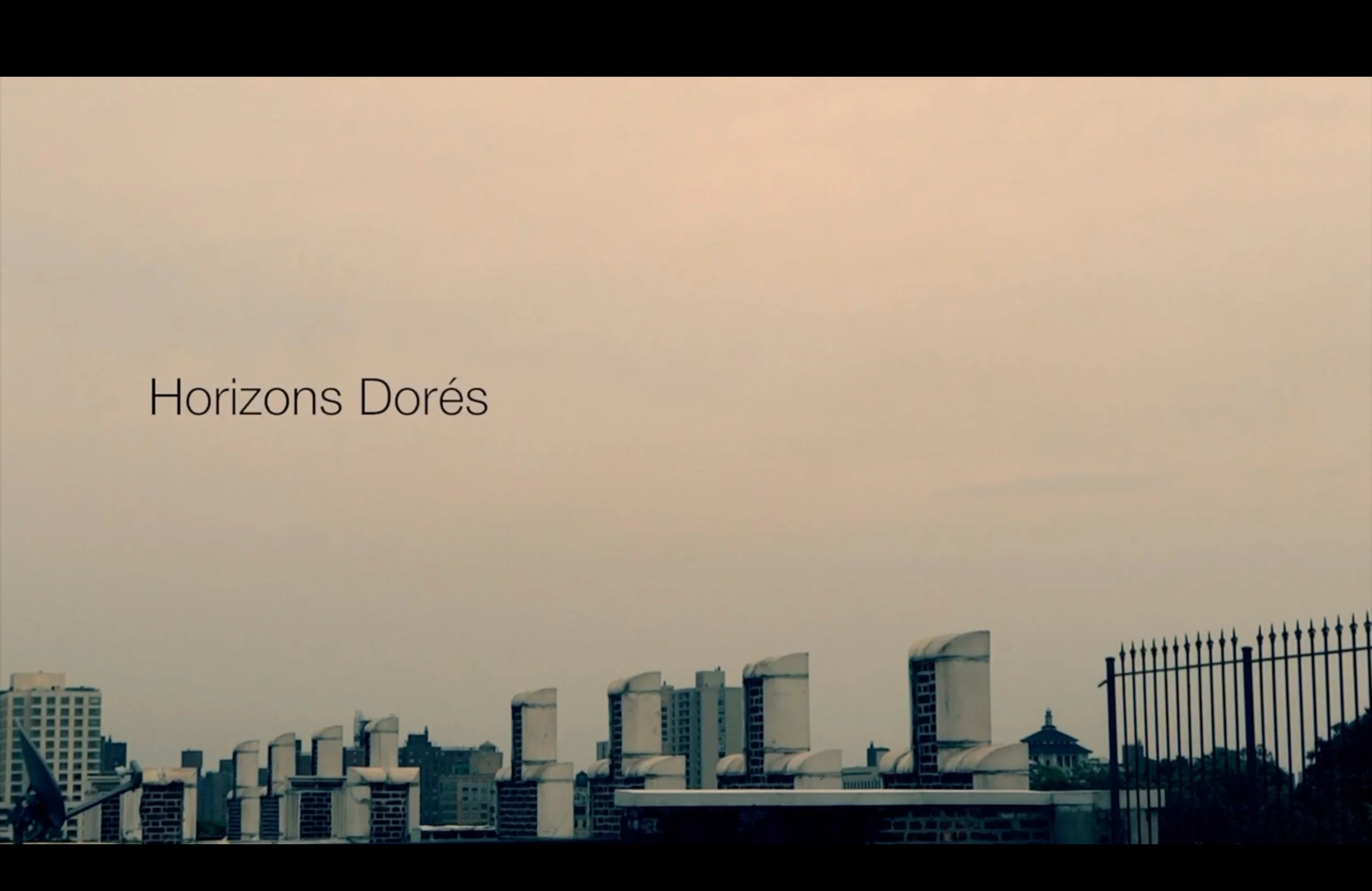
    Horizons Dorés is a short film created in the summer of 2012 on the rooftop of the apartment building where Seth Dager was living on Central Park North in New York City. Shot during the same period as Les Fausses Coïncidences, the work shifts away from narrative fiction and toward atmospheric documentation.

    The film functions loosely as a music video set to “Flutes” by Hot Chip.

    Across its duration, the camera alternates between two visual registers: wide establishing shots of the surrounding cityscape and quiet observational footage of Dager and Emmanuel Libet moving across the rooftop space. The two appear separately and together, pacing, sitting, and crossing the open surface as the day gradually moves toward evening.

    The environment is central to the work.

    On the day the film was shot, the air over Manhattan was unusually humid and hazy. The sky carried a soft, diffused glow that lingered through sunset, flattening the skyline into a warm, atmospheric field. In the final edit, a subtle color grade was used to preserve and extend this tonal quality, emphasizing the muted gold haze that gave the film its title.

    Rather than constructing a narrative, Horizons Dorés preserves a shared moment.

    The rooftop becomes both stage and vantage point—an elevated threshold between private life and the surrounding city. Movement across the space is casual and unstructured. The figures do not perform actions so much as inhabit the environment while the music carries the temporal rhythm of the piece.

    Within the broader Ezra practice, Horizons Dorés can be understood retrospectively as an early cinematic experiment in durational presence. The work documents a lived moment—friendship, atmosphere, and place—through restrained observation rather than story or explanation.

    The film does not attempt to dramatize the moment.

    It holds it long enough for its tone to remain.

    In this way, Horizons Dorés functions as a quiet tribute to a shared summer and to a friendship seen through the authorial lens of the camera.

    Credits

    Directed by Seth Dager

    Edited by Seth Dager

    Featuring Seth Dager & Emmanuel Libet

    Music:

    “Flutes” — Hot Chip