What Ezra Is
EZRA is an art practice and living archive created by artist Seth / Ezra Dager that uses the accumulated material of lived experience as artistic material.
Photographs, objects, writings, playlists, environments, memories, and everyday traces are retained rather than immediately discarded or forgotten.
Over time, this material is held in relation long enough for patterns, relationships, and meanings to emerge.
The work is developed through sustained acts of documentation, observation, arrangement, and return.
Meaning in EZRA is not assigned.
It stabilizes over time.
How Ezra Works
Experience accumulates faster than it can be understood.
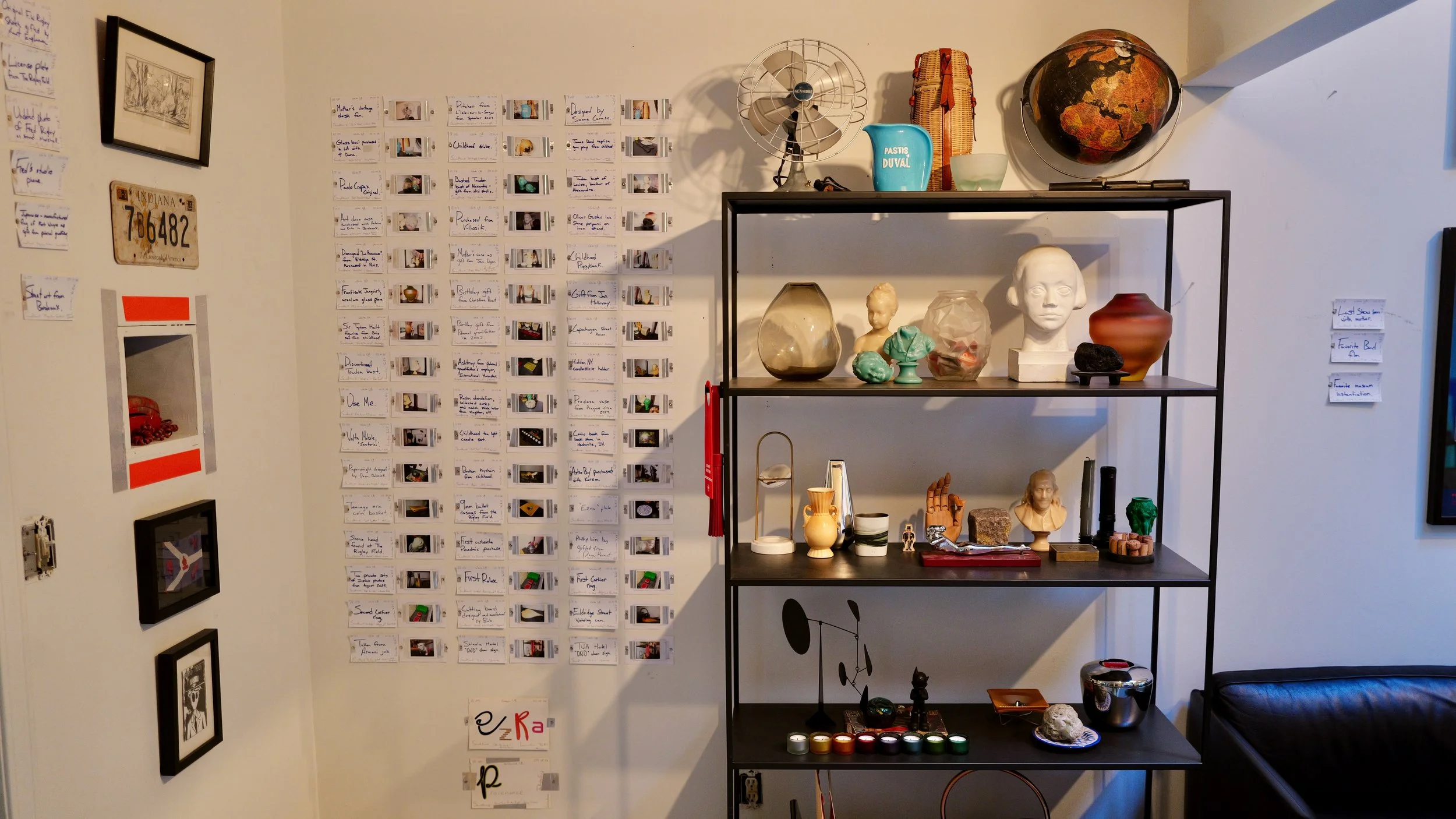
EZRA holds that experience in place through photography, writing, sound, objects, environments, and repeated acts of documentation over time.
While working with the archive, material is observed, rearranged, revisited, and held in relation long enough for patterns and relationships to begin forming across the archive.
Objects may remain within the environment for months before their meaning stabilizes and is encoded through a Data Frame.
As Data Frames accumulate, photographs, objects, memories, environments, and fragments of lived experience begin participating in new relationships, meanings, and artworks over time.
The archive continuously reshapes itself through accumulation, proximity, duration, and return.
Meaning stabilizes through sustained attention.
The Art and The System
EZRA operates simultaneously as an art practice and a living archival system.
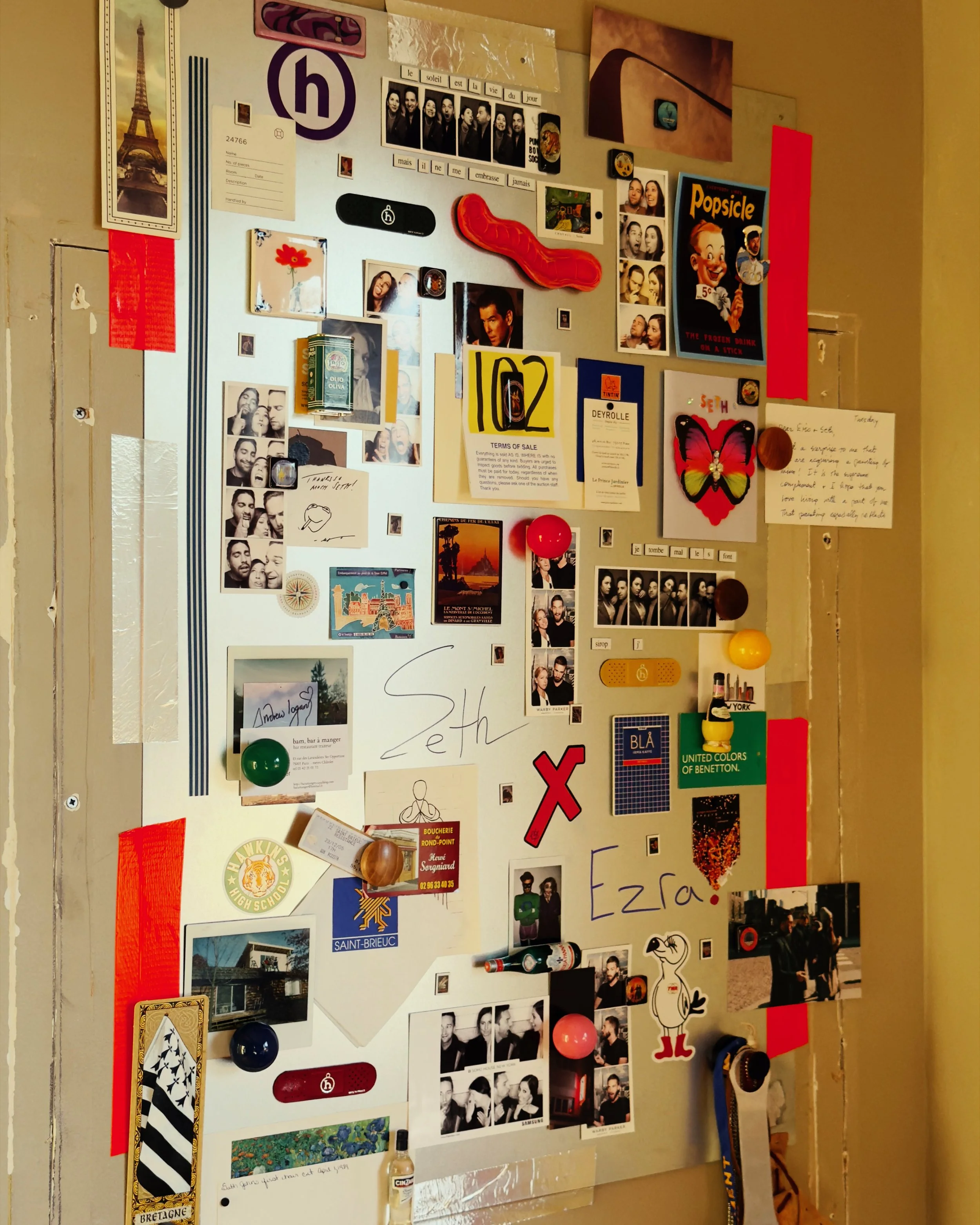
The system is lived through sustained acts of photography, writing, sound, object retention, spatial arrangement, and durational documentation accumulated over time.
The works that emerge from this process are not illustrations of the system.
They are its outputs.
At the same time, individual works demonstrate the behavior of the system itself — revealing how meaning stabilizes through proximity, repetition, duration, and accumulation across the archive.
The system is not applied to the work afterward.
The work is where the system becomes visible.
The Embedded Exhibition
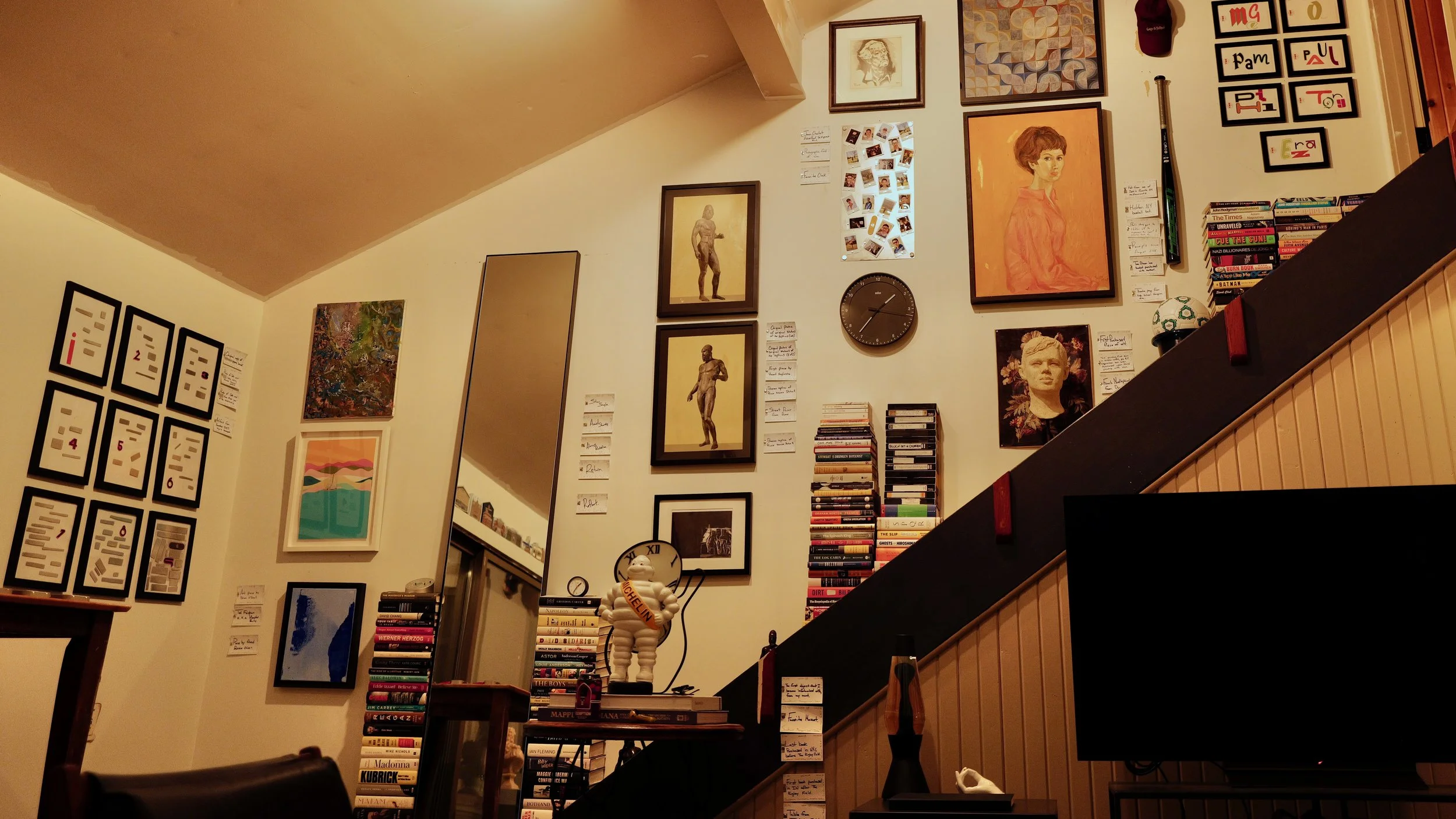
At The Rigley Field, the living archive extends beyond individual artworks and into the space itself.
Objects, photographs, Data Frames, installations, architecture, furniture, and accumulated material are placed throughout the environment over time, allowing meaning to emerge not only within individual works, but through their proximity to one another within the larger archive.
Works may remain in place for months before their relationships stabilize.
As the archive continues to grow, the environment continuously reorganizes itself through accumulation, duration, and spatial relation.
The result is an embedded exhibition in which the archive is experienced spatially rather than as a series of isolated objects.
The space itself becomes a dimensional representation of the living archive.