What Ezra Is
EZRA is a contemporary art practice and living archive created by Seth Dager.
The work begins with a simple observation:
Experience accumulates faster than it can be understood.
Photographs, objects, music, places, memories, relationships, and everyday traces of life are continuously produced and preserved. Yet much of their meaning disappears before it can be recognized.
EZRA was created as a way of remaining with experience long enough for patterns, relationships, and meaning to emerge.
Rather than treating lived experience as something to be documented and archived, the practice treats it as artistic material.
Meaning is not assigned.
It is recognized.
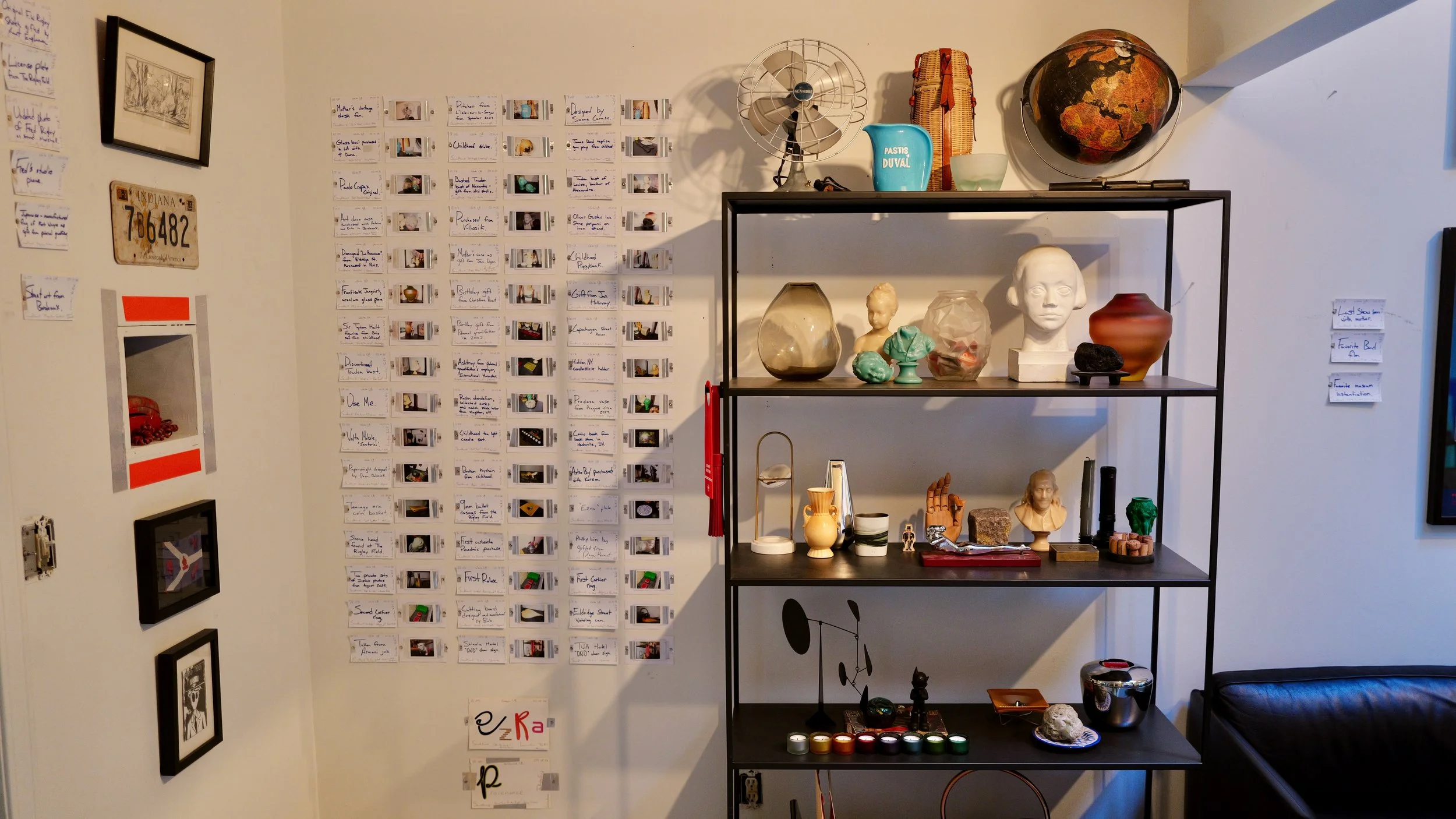
Why Ezra Exists
By late 2024, Seth had begun documenting relationships between photographs, objects, music, memories, and everyday life.
What began as notes evolved into a framework.
The more he worked, the more he realized he was not inventing something new.
He was mapping how he already processed experience.
When that framework became coherent enough to secure a provisional patent, he made a series of decisions that allowed him to fully commit to the work.
He ended his marriage.
He left the career he had spent his adult life building.
And he purchased The Rigley Field, the former home and studio of artist Frederick Rigley.
What began as a personal attempt to understand a life became the foundation of a larger artistic practice.
Over time, the map became the work.
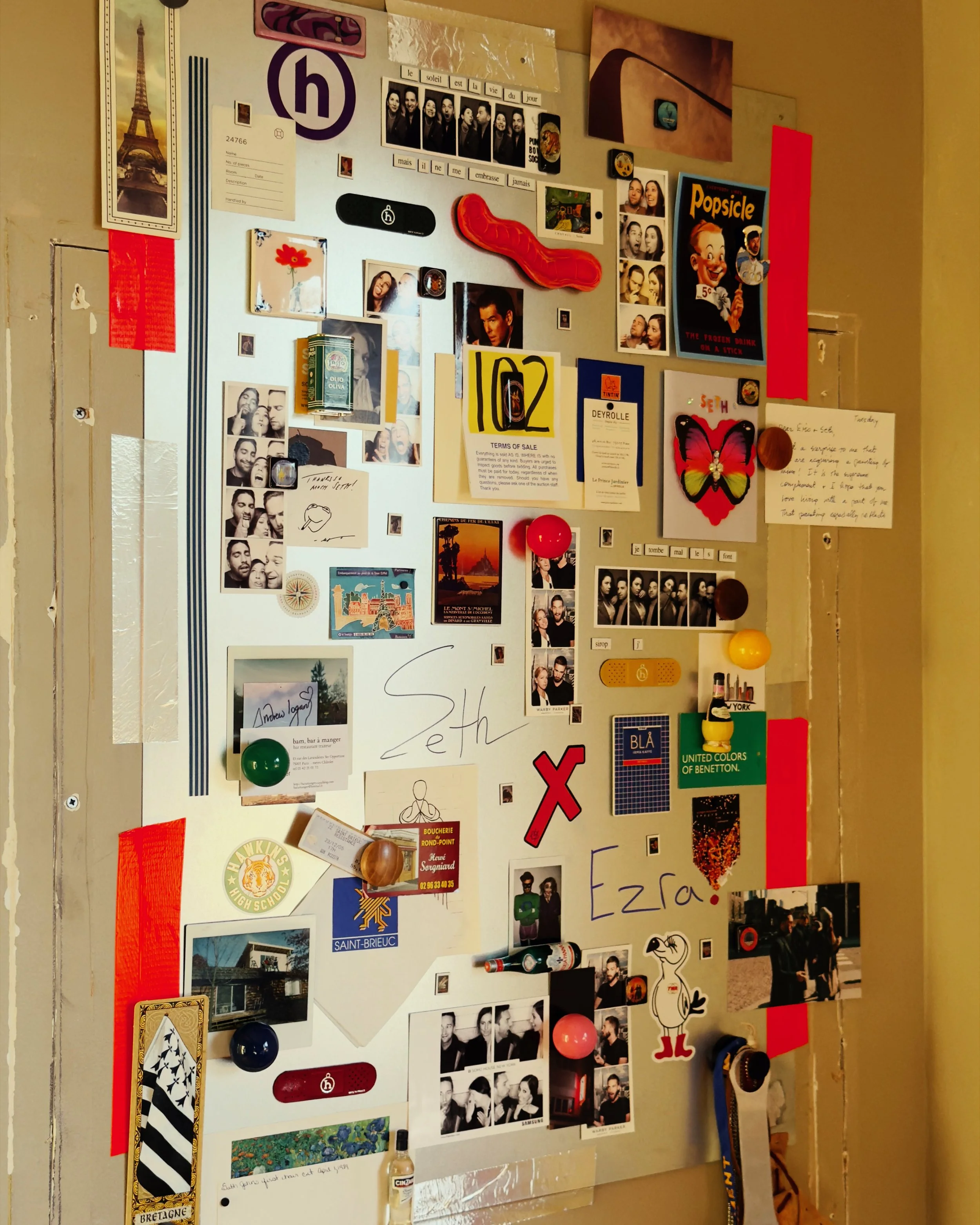
What The Work Proposes
EZRA proposes that meaning emerges through relationships rather than isolation.
Photographs do not exist alone.
Objects do not exist alone.
Memories do not exist alone.
Experiences do not exist alone.
Meaning forms when these elements are held in relation long enough for structure to become visible.
The practice therefore prioritizes:
Duration over immediacy
Recognition over interpretation
Relationships over categories
Presence over performance
The work is not concerned with producing meaning.
It is concerned with creating the conditions under which meaning becomes legible.
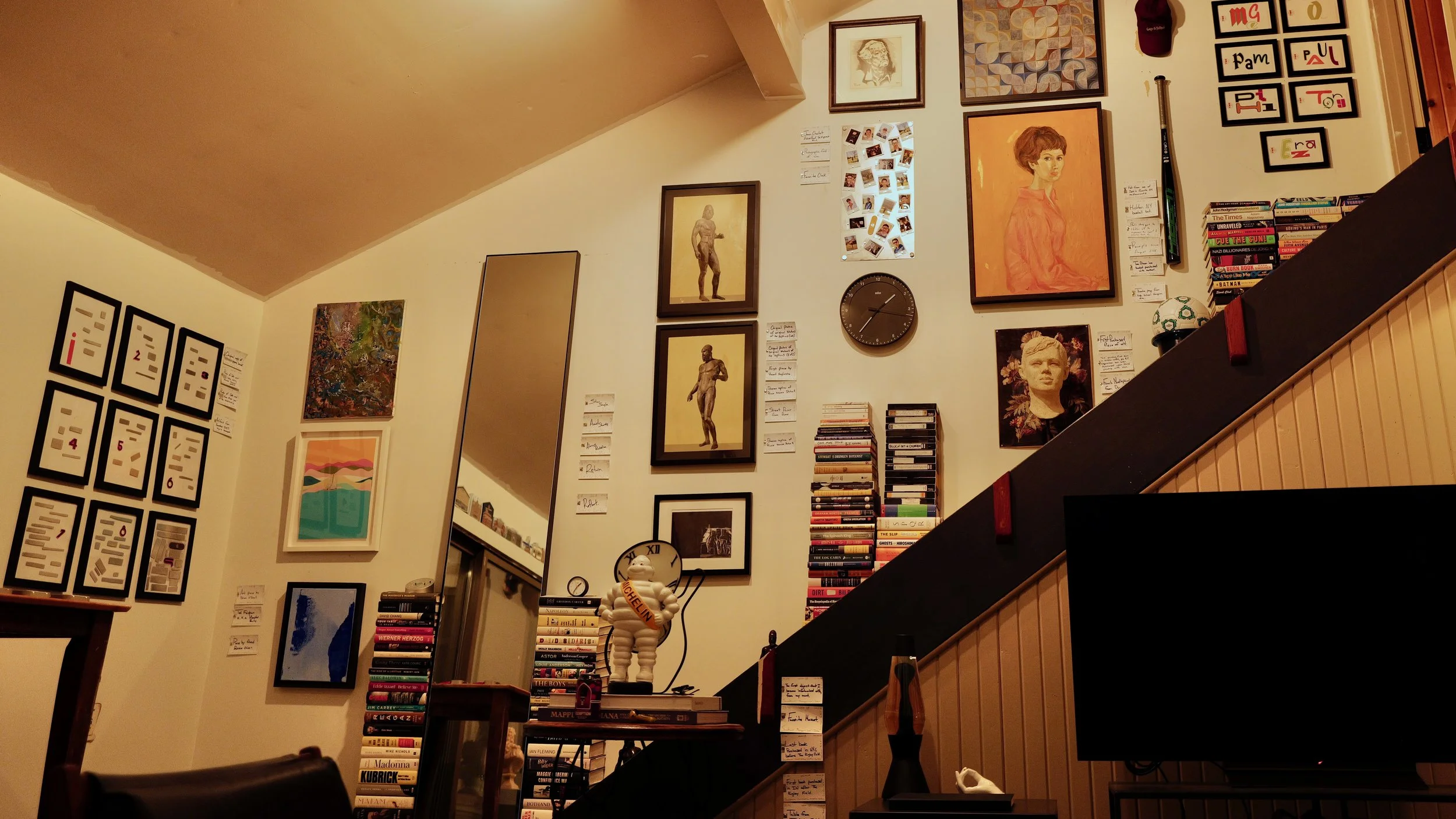
The Living Archive
At The Rigley Field, the archive extends beyond individual artworks and into the environment itself.
Objects, photographs, Data Frames, installations, architecture, furniture, and accumulated material remain in place over time, allowing meaning to emerge not only within individual works, but through their proximity to one another.
Works may remain in place for months before their relationships stabilize.
As the archive continues to grow, the environment continuously reorganizes itself through accumulation, duration, and return.
The result is a living archive in which the work is experienced spatially rather than as a series of isolated objects.
The archive becomes a place where relationships can be observed.