Passing Through I
Video work — durational movement
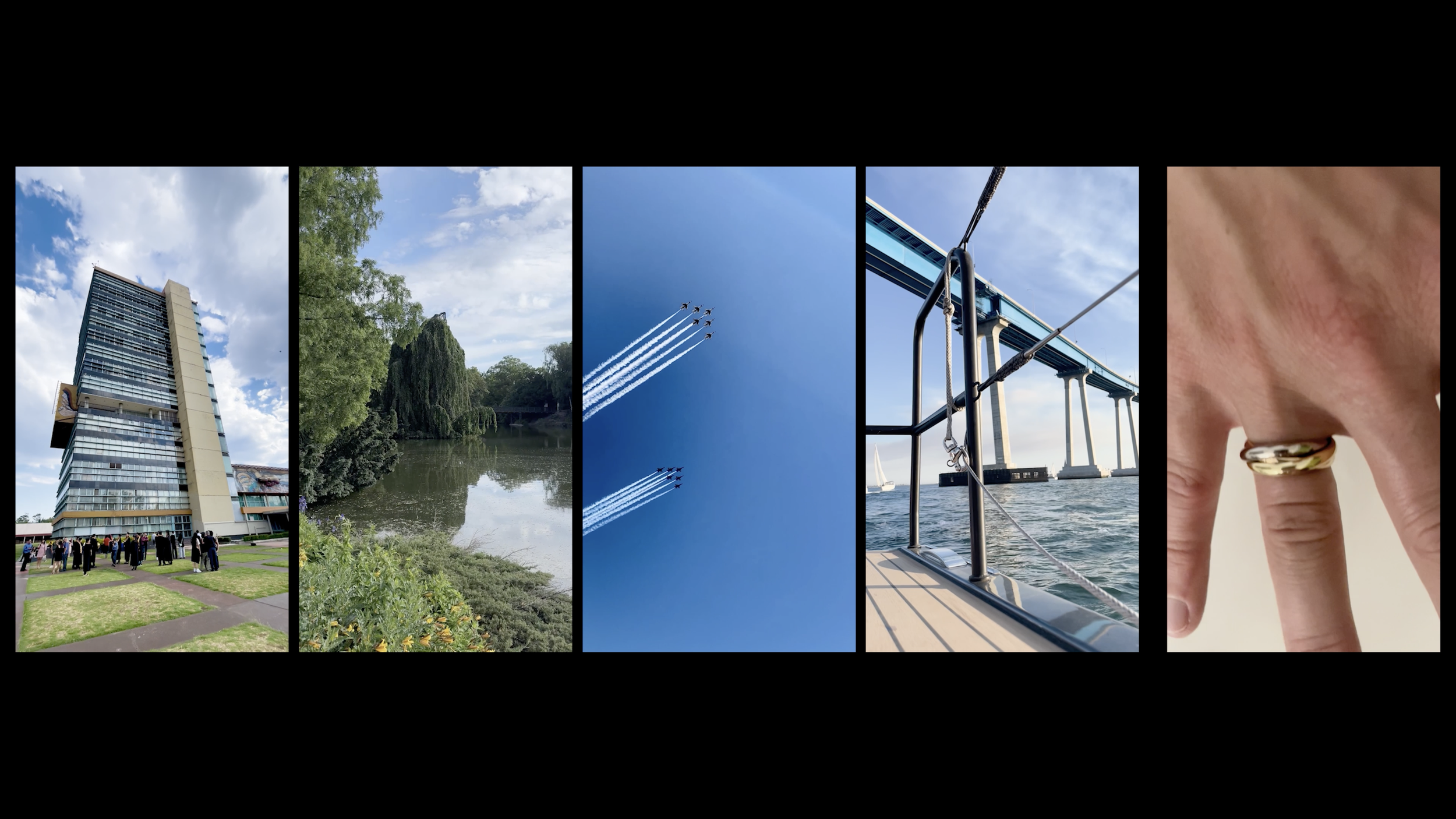
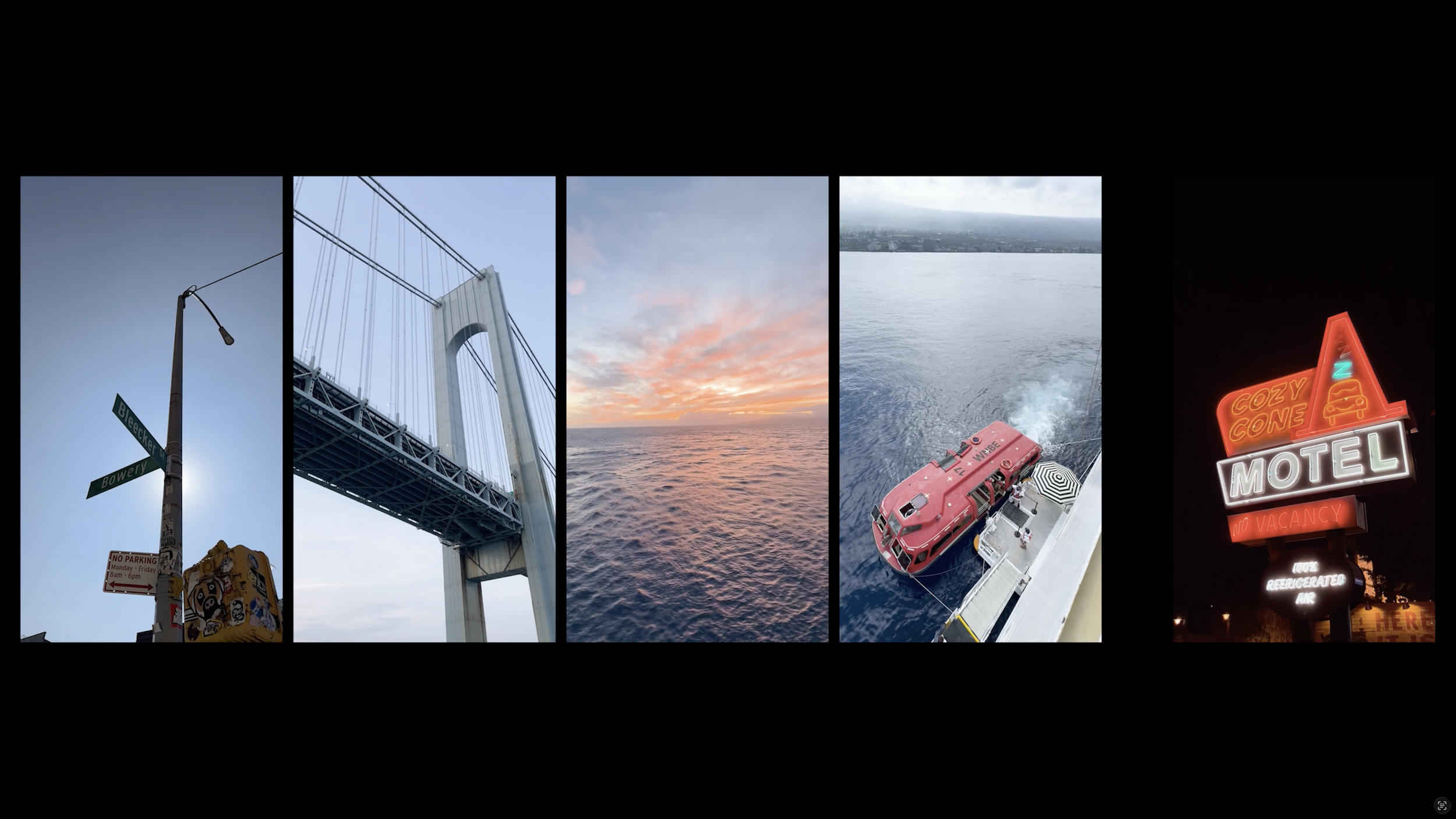
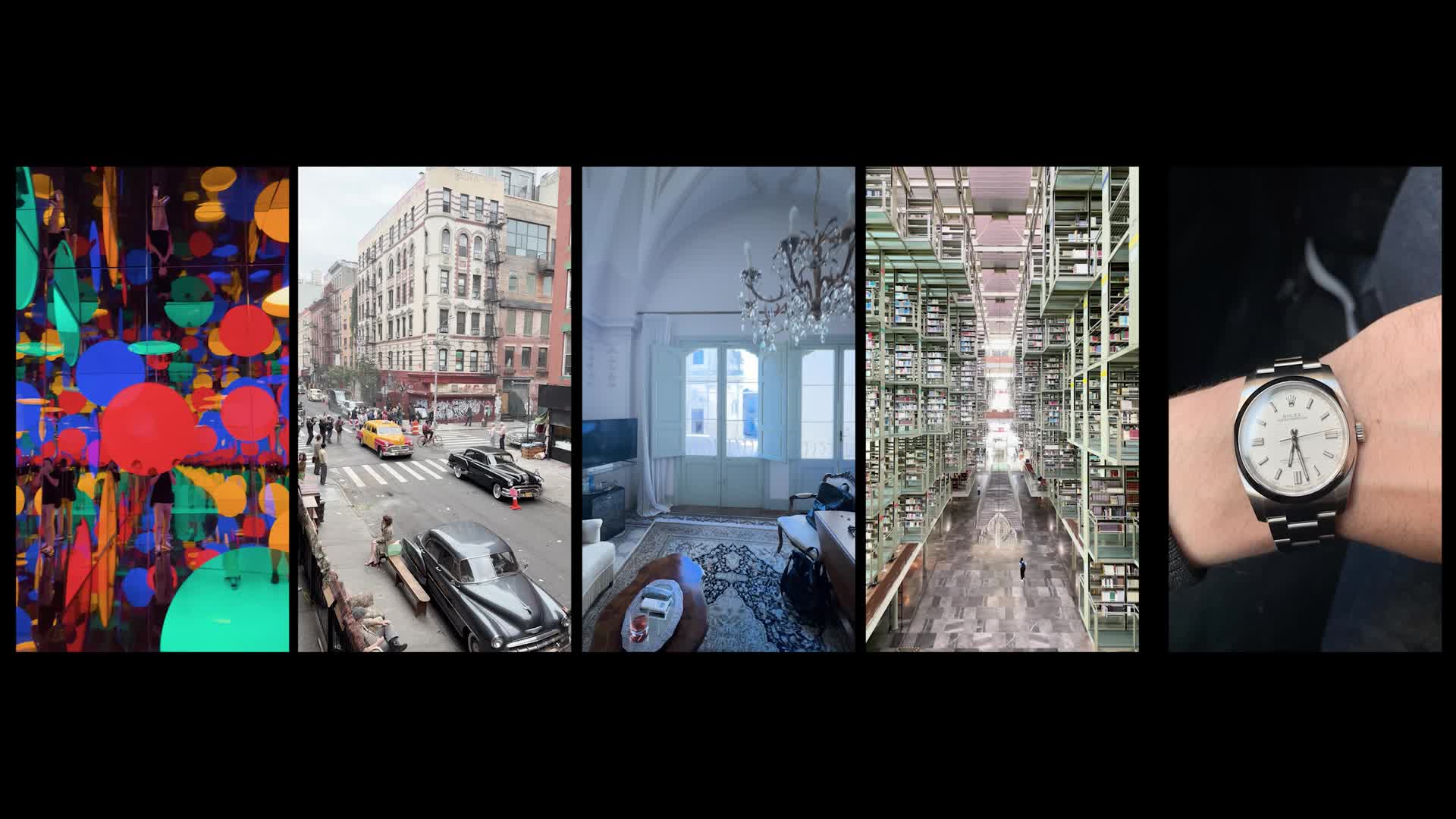
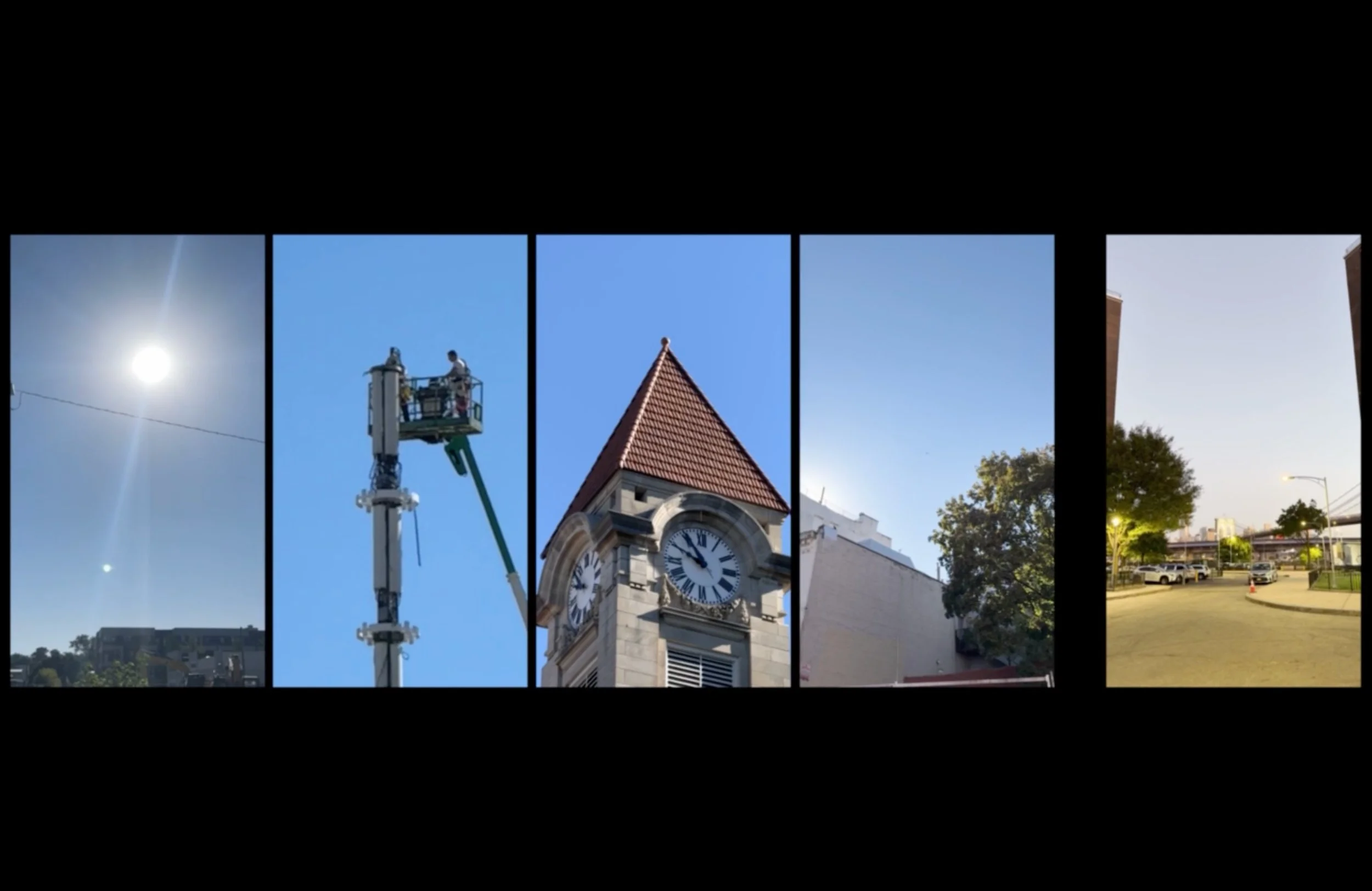
Passing Through I records a series of moving-image sequences captured while traveling through Daytona International Speedway and the Las Vegas Strip. Rather than isolating events or constructing narrative, the work preserves the condition of being in transit — moments encountered without pause, completion, or return.
Each sequence originates as a continuous recording made within an active environment — a pit lane, a racetrack, a passing barrier, a street under artificial spectacle, a partial self-observation. The camera does not stabilize the scene. Movement persists through vehicles, motion, obstruction, and shifting vantage.
The work consists of five looped video recordings arranged in a continuous horizontal field. While the composition does not form a literal spatial symbol, it resolves structurally as an exclamation point through color, composition, and subject.
Four sequences maintain chromatic continuity across the field, forming the visual assertion. A fifth sequence, rendered in black and white, functions as the punctuation mark.
The exclamation point is not drawn.
It is recognized.
The structure does not unify the sequences.
It stabilizes their relationship.
The recordings are durational and non-linear. Nothing begins or concludes. Each sequence holds a segment of time that continues past its own visibility, restarting without transition.
Within the Ezra system, these videos function as fieldwork Data Frame precursors: fragments of experience preserved before stabilization. Unlike fixed environmental works, the images here do not settle. They pass.
The viewer is invited, through the opening data frame, to select and loop one or more of the listed soundtracks while watching the sequence.
Sound in this work does not illustrate the images.
It establishes duration.
The track holds the perceptual field steady while the images continue to move.
As the sequence progresses, the videos maintain their independence while aligning through rhythm, tone, and recurrence. The composition resolves not through synchronization, but through accumulation.
Nothing connects the scenes except movement.
Within the broader Ezra system, Passing Through I records how meaning can form even when experience is not held in place — when emphasis emerges through passage rather than stillness.
The images remain in motion.
The punctuation remains.
Meaning appears through passage.
Credits
Recorded by Seth Dager
Edited by Seth Dager