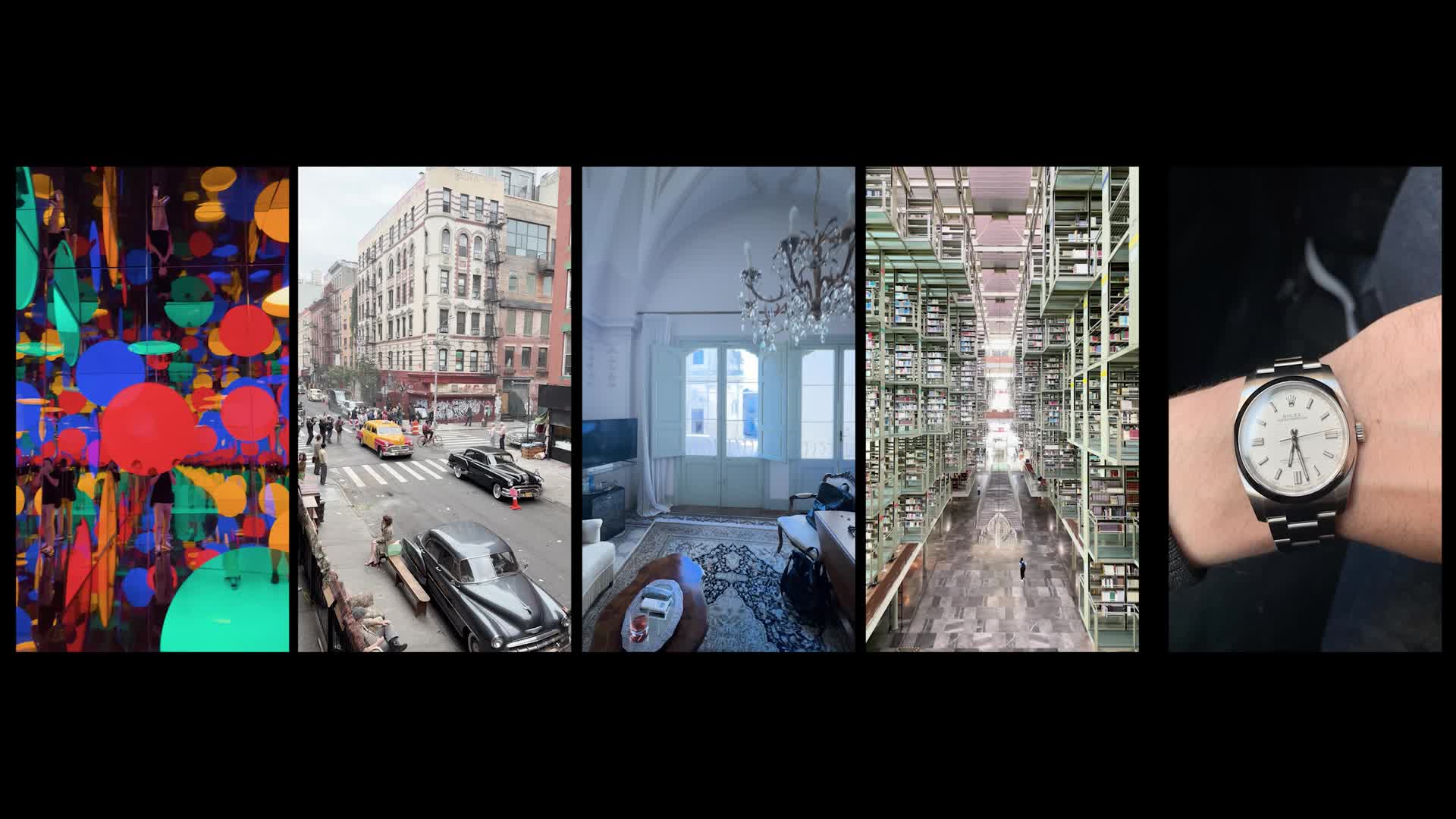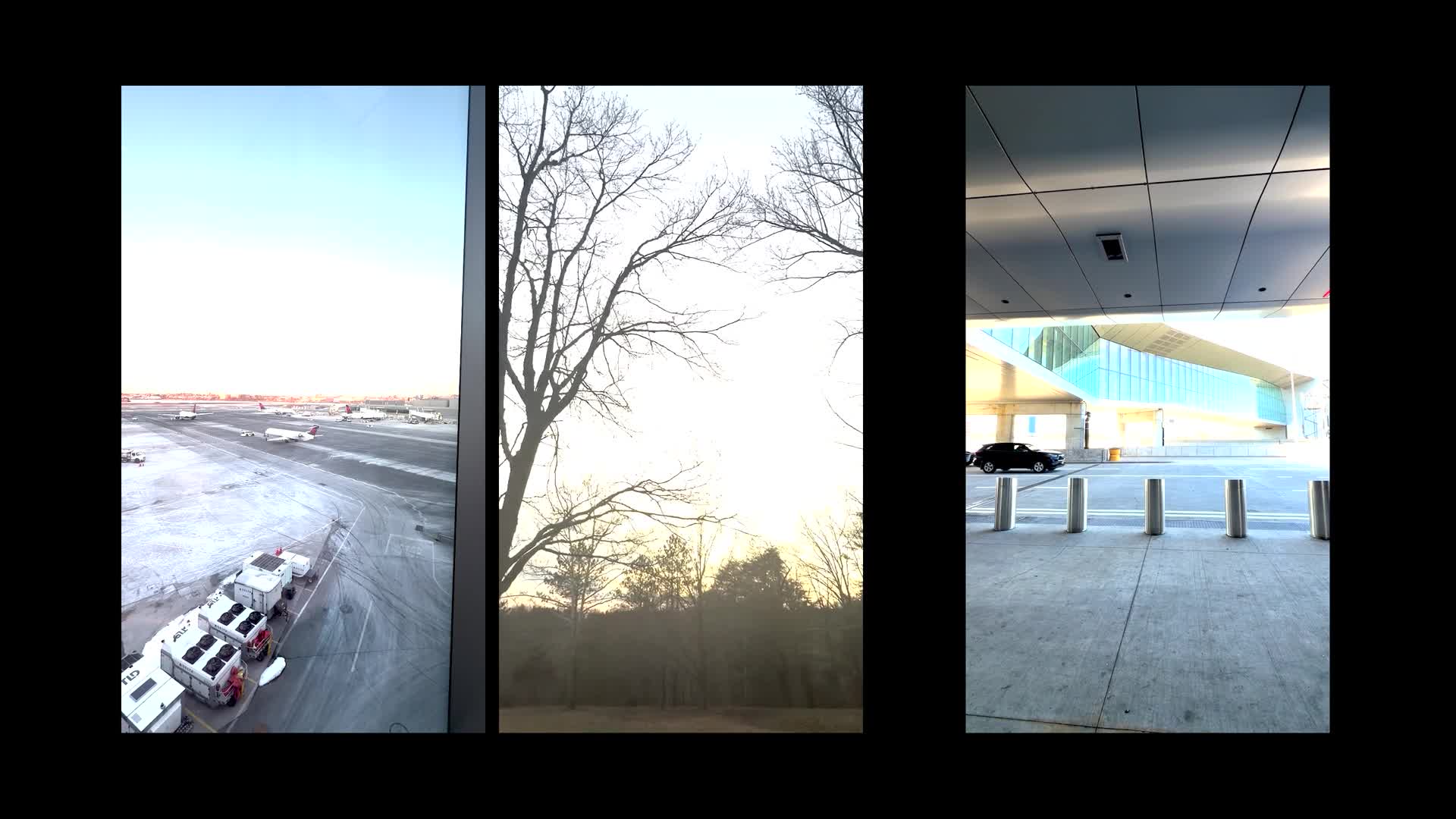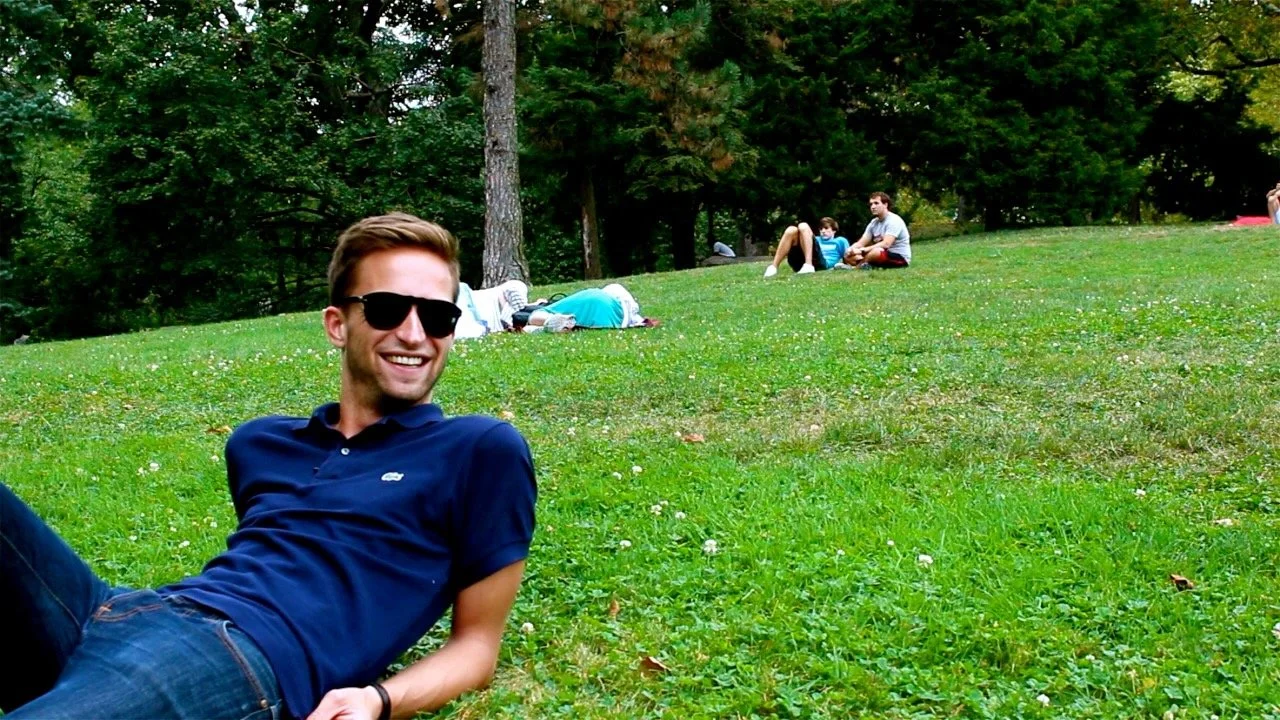
Narrative Outputs
Narrative Outputs are constructed works in which experience has been held long enough to take form.
They do not simply record reality.
They reorganize it — through duration, repetition, framing, and sound.
Across these works, images move between abstraction and recognition — allowing relationships to emerge over time rather than resolve immediately.
What appears as documentation is structured.
Viewing Note
Some works begin with a listed soundtrack. When present, the viewer is encouraged to open the song on a streaming service and loop it while watching.
Sound establishes the durational field through which the image becomes legible.
-
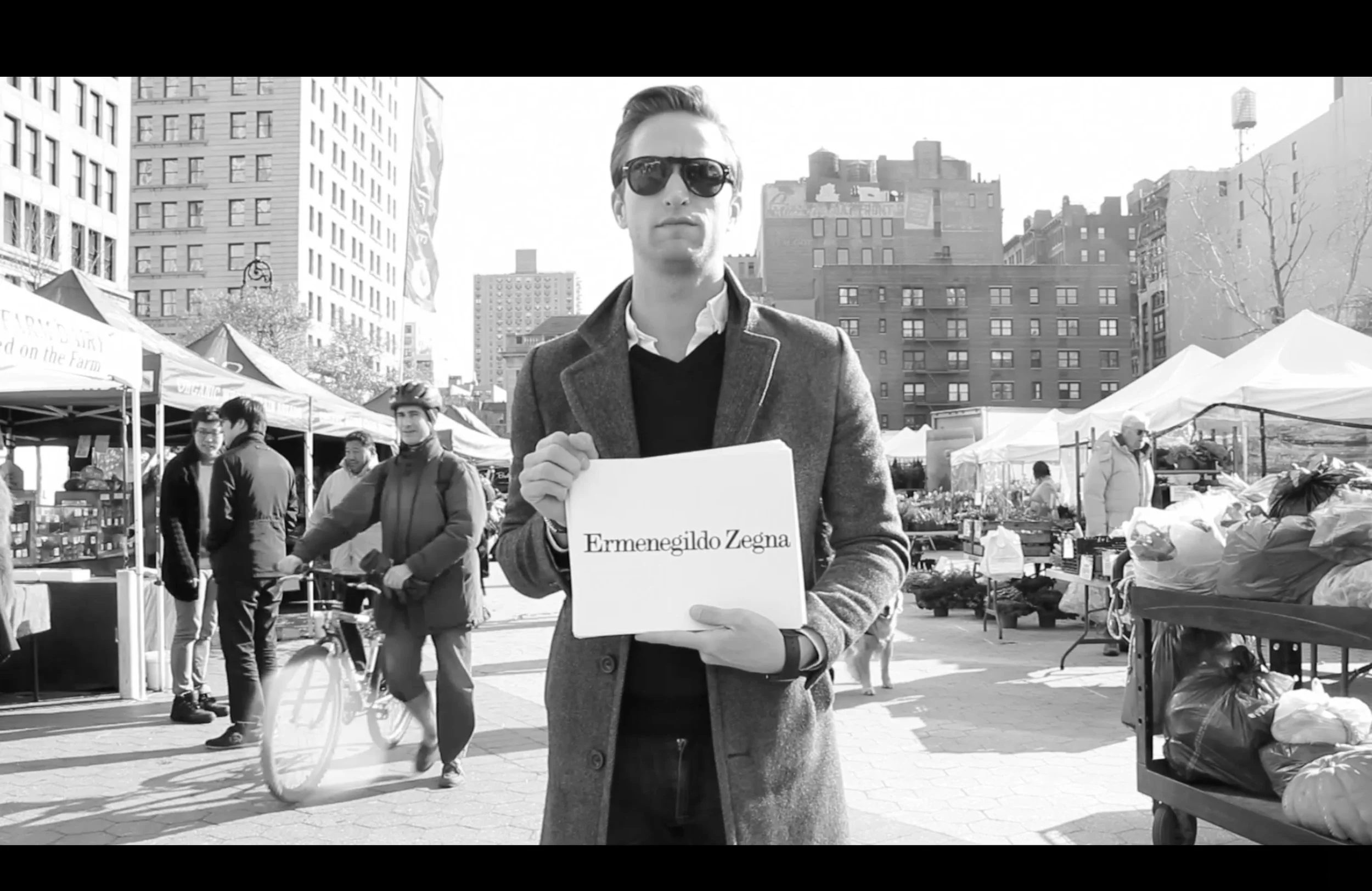
My Stuff
Video work — narrative output
My Stuff began as a workplace assignment but became an early experiment in narrative output through movement, location, and self-documentation.
The format originates from the Vanity Fair column of the same name. Employees at Ermenegildo Zegna’s corporate offices were periodically featured on the company intranet through a written transcript of short questions and answers describing personal preferences, habits, and tastes.
Rather than submitting written responses, I proposed translating the format into video.
Each question and answer was written onto individual cards and filmed sequentially across New York City. I carried the cards with me and recorded them one by one in different locations, allowing the environment to shift with each prompt. Some locations relate directly to the question being asked. Others do not.
This movement transforms a static questionnaire into a narrative structure. The viewer experiences the answers not as a fixed transcript, but as a series of moments unfolding across the city.
Within the broader Ezra system, My Stuff can be understood retrospectively as an early form of narrative output—a structured response translated into lived context rather than text alone.
The questions remain constant.
The environment changes.
Meaning emerges through sequence, location, and movement.
Credits
Written by Seth Dager
Directed by Seth Dager
Edited by Seth Dager
Performed by Seth Dager
-
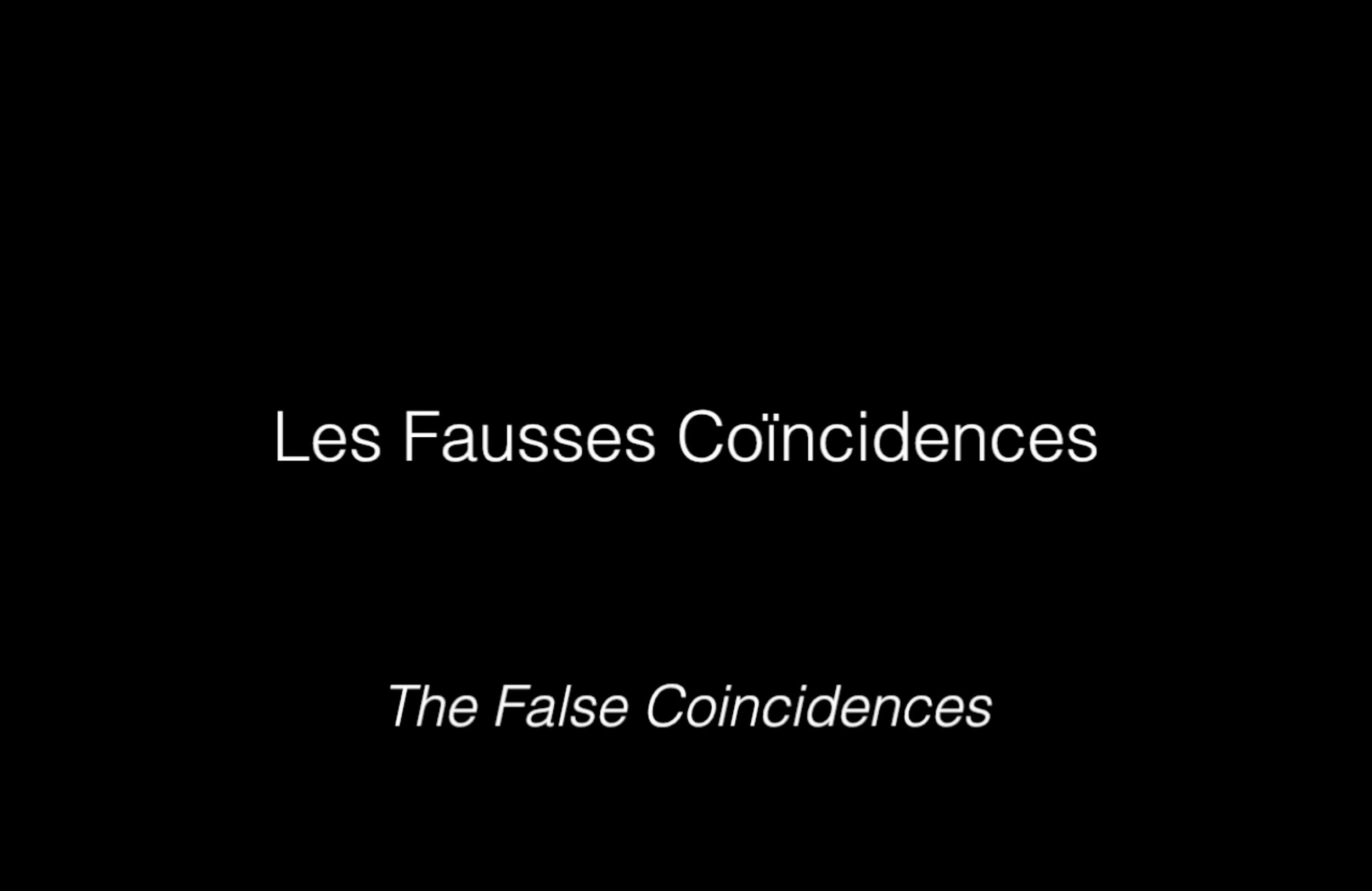
Les Fausses Coincidences
Short film — fictional narrative output
Les Fausses Coïncidences is a six-minute French-language short film written and performed by Seth Dager and Emmanuel Libet. The film was created in the summer of 2012 in Dager’s apartment on Central Park North in New York City as a birthday gift for their friend Amaury, who was celebrating his thirtieth birthday in Paris.
The film unfolds as a semi-fictional phone conversation between Dager and Libet. During the call, the two recount a series of strange coincidences that occurred throughout the day—moments in which each unexpectedly encountered something that reminded them of Amaury.
What begins as casual storytelling quickly becomes absurd.
Both men become convinced that they separately saw Amaury’s favorite actress, Catherine Deneuve, earlier that day. Each recounts the encounter with complete sincerity. Yet the stories contradict each other in subtle ways, and in the dramatized vignettes that accompany the conversation the two friends quietly exchange roles within each other’s memories.
The coincidences multiply.
The certainty remains.
The structure of the film plays with the boundary between recollection and invention. Real traits and habits of Amaury are woven throughout the dialogue, while the events themselves drift further from reality with each retelling.
The final sequence reveals the framing device: the entire conversation has occurred within a dream. The two men wake in the same apartment after having independently experienced the same strange chain of events. Still uncertain what was real and what was imagined, they decide to remain home that evening and watch a Catherine Deneuve film together—mirroring the decision made during the phone call inside the dream.
After the credits, the narrative dissolves completely. The actors appear out of character to wish Amaury a happy birthday as “Dream a Little Dream of Me” by Mama Cass closes the film.
Within the broader Ezra practice, Les Fausses Coïncidences can be understood retrospectively as an early narrative experiment in fictional mode. The film uses real relationships and recognizable details but intentionally rearranges them into an invented sequence of events. Truth remains present in fragments, while the narrative itself becomes playful, ironic, and deliberately unreliable.
The result is not a record of what happened, but a small cinematic construction built from friendship, memory, and coincidence.
Credits
Written by Seth Dager & Emmanuel Libet
Directed by Seth Dager
Edited by Seth Dager
Performed by Seth Dager & Emmanuel Libet
-
Passing Through I
Video work — durational movement
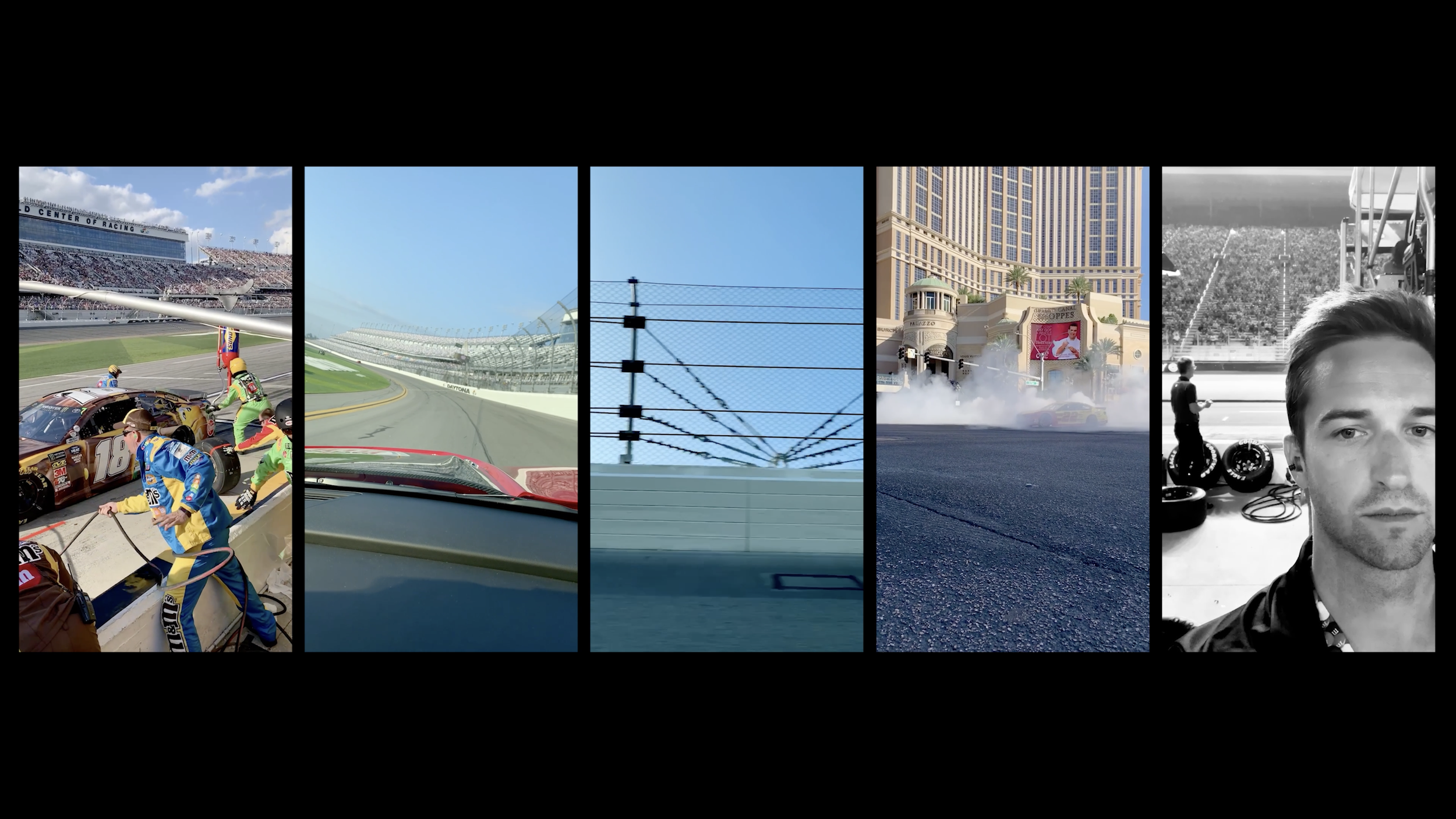
Passing Through I records a series of moving-image sequences captured while traveling through Daytona International Speedway and the Las Vegas Strip. Rather than isolating events or constructing narrative, the work preserves the condition of being in transit — moments encountered without pause, completion, or return.
Each sequence originates as a continuous recording made within an active environment — a pit lane, a racetrack, a passing barrier, a street under artificial spectacle, a partial self-observation. The camera does not stabilize the scene. Movement persists through vehicles, motion, obstruction, and shifting vantage.
The work consists of five looped video recordings arranged in a continuous horizontal field. While the composition does not form a literal spatial symbol, it resolves structurally as an exclamation point through color, composition, and subject.
Four sequences maintain chromatic continuity across the field, forming the visual assertion. A fifth sequence, rendered in black and white, functions as the punctuation mark.
The exclamation point is not drawn.
It is recognized.
The structure does not unify the sequences.
It stabilizes their relationship.
The recordings are durational and non-linear. Nothing begins or concludes. Each sequence holds a segment of time that continues past its own visibility, restarting without transition.
Within the Ezra system, these videos function as fieldwork Data Frame precursors: fragments of experience preserved before stabilization. Unlike fixed environmental works, the images here do not settle. They pass.
The viewer is invited, through the opening data frame, to select and loop one or more of the listed soundtracks while watching the sequence.
Sound in this work does not illustrate the images.
It establishes duration.
The track holds the perceptual field steady while the images continue to move.
As the sequence progresses, the videos maintain their independence while aligning through rhythm, tone, and recurrence. The composition resolves not through synchronization, but through accumulation.
Nothing connects the scenes except movement.
Within the broader Ezra system, Passing Through I records how meaning can form even when experience is not held in place — when emphasis emerges through passage rather than stillness.
The images remain in motion.
The punctuation remains.
Meaning appears through passage.
Credits
Recorded by Seth Dager
Edited by Seth Dager
-
Ambient I
Video work — environmental duration
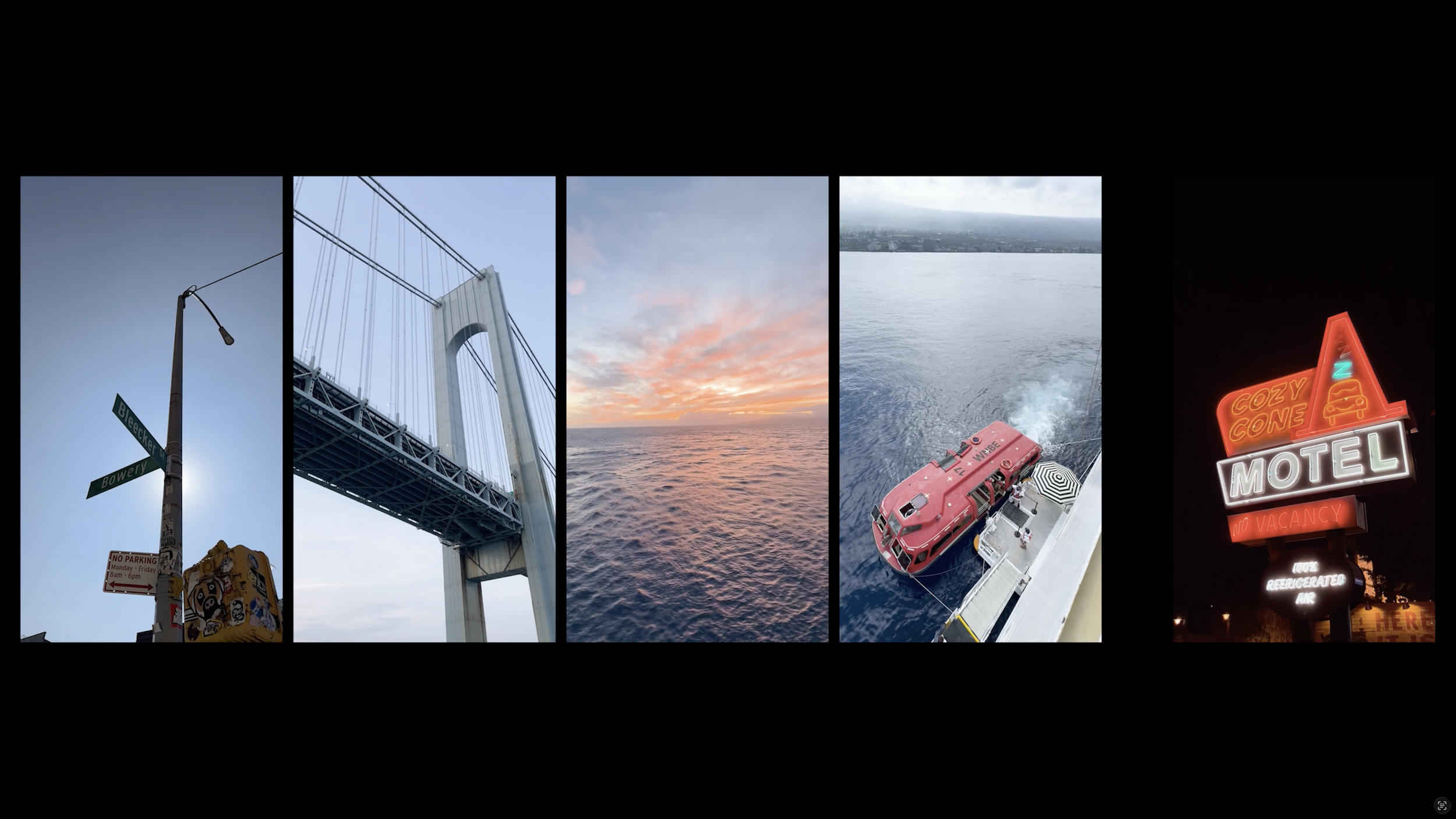
Ambient I records a series of environmental moments captured across different places and times within the artist’s life. Rather than presenting dramatic events or narrative movement, the work preserves brief instances of stillness encountered while traveling through New York City, Hawai‘i, and Disneyland.
Each image originates as a simple phone recording made when a location or atmosphere registered as momentarily complete — a corner of a street, a bridge crossing, open water, a sunset horizon, a neon sign after dark. The camera remains static. Movement occurs only through weather, light, vehicles, water, or distant activity.
The work consists of five vertical video recordings arranged in the recurring exclamation-point structure used throughout the Ezra corpus. Four videos form the vertical assertion. A fifth image functions as the punctuation mark.
The structure does not dramatize the scenes.
It stabilizes them.
The recordings remain intentionally uneventful. Nothing begins or resolves. Each clip holds a brief span of environmental time — clouds shifting, water moving, traffic passing, light fading.
Within the Ezra system, these moments function as environmental Data Frame precursors: fragments of experience preserved before interpretation or narrative framing.
The viewer is invited, through the opening data frame, to play and loop the listed soundtrack while watching the sequence.
Sound in this work does not illustrate the images.
It establishes duration.
The track holds the emotional field steady while the environments remain visible long enough for their quiet structure to register.
As the sequence progresses, the videos maintain their stillness while the soundtrack continues to repeat. The images remain separate yet adjacent, forming a temporary constellation of places encountered across time.
Nothing connects the locations except attention.
Within the broader Ezra system, Ambient I records how meaning often forms through simple environmental presence — moments that might otherwise disappear if not held long enough to be seen.
The images remain ordinary.
The punctuation declares that something mattered.
Meaning appears through duration.
Credits
Recorded by Seth Dager
Edited by Seth Dager
-
Ambient II
Video work — environmental duration
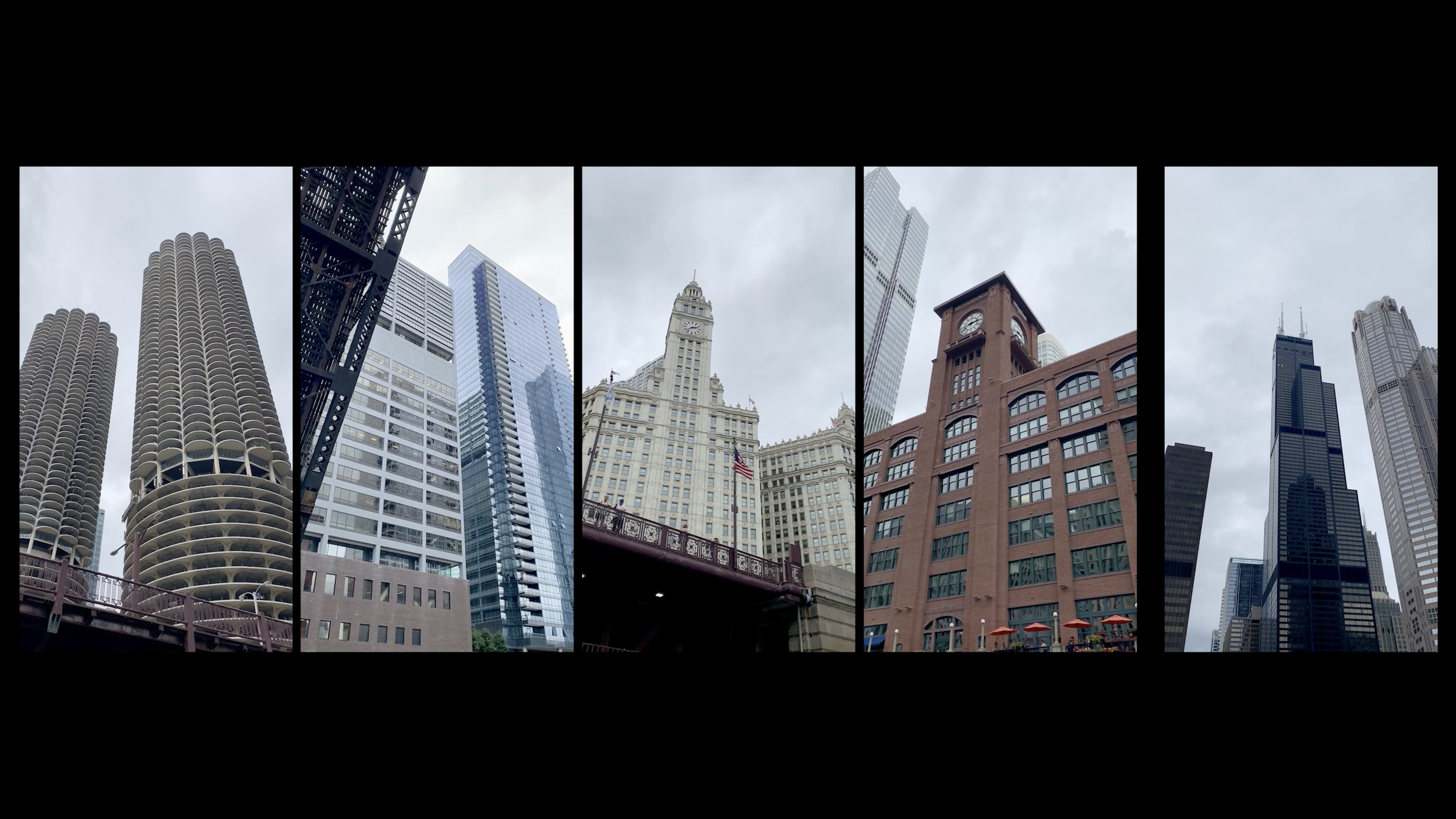
Ambient II records a sequence of environmental moments captured during an architectural river tour in Chicago in August 2019. The recordings preserve the city as it appeared from the water while the boat moved slowly through the Chicago River, passing beneath bridges and alongside the surrounding architecture.
Each video is a static environmental capture. The camera remains still while the environment moves through the frame — buildings shifting perspective, bridges passing overhead, clouds drifting across the sky, and water reflecting the skyline.
The piece consists of five vertical recordings arranged in the recurring exclamation-point structure used throughout the Ezra corpus. Four images form the vertical assertion. A fifth image functions as the punctuation mark.
The structure does not dramatize the architecture.
It stabilizes the moment.
All five recordings originate from the same afternoon on the river. The locations remain within Chicago and within a narrow window of time, producing a sequence that feels continuous even though each frame is independent.
The recordings were made during a trip to Chicago shared with the artist’s mother.
It would be the last time the artist saw her before her passing in January 2020.
The soundtrack accompanying the work is “Sister Owls” by Monster Rally, a group the artist and his mother loved and listened to together for years.
The track had been added to the artist’s music library two days before these videos were recorded and was being played repeatedly during the trip. The music therefore functions not as a soundtrack chosen after the fact, but as part of the lived atmosphere of the day.
The viewer is invited, through the opening data frame, to play and loop the song independently while watching the video sequence.
Sound in this work does not illustrate the images.
It preserves the sonic environment in which the moment occurred.
The pairing may initially feel unexpected — the relaxed, drifting rhythm of the music contrasts with the monumental scale of Chicago’s architecture. The connection becomes clear only through context.
The song belongs to the memory of the day.
Within the broader Ezra system, Ambient II demonstrates how environmental presence, memory, and sound often stabilize meaning long after the moment itself has passed.
The architecture remains unchanged.
The river continues moving.
The music holds the moment in place.
Meaning emerges through duration, attention, and time.
Credits
Recorded by Seth Dager
Edited by Seth Dager
-
Ambient III
Video work — environmental duration
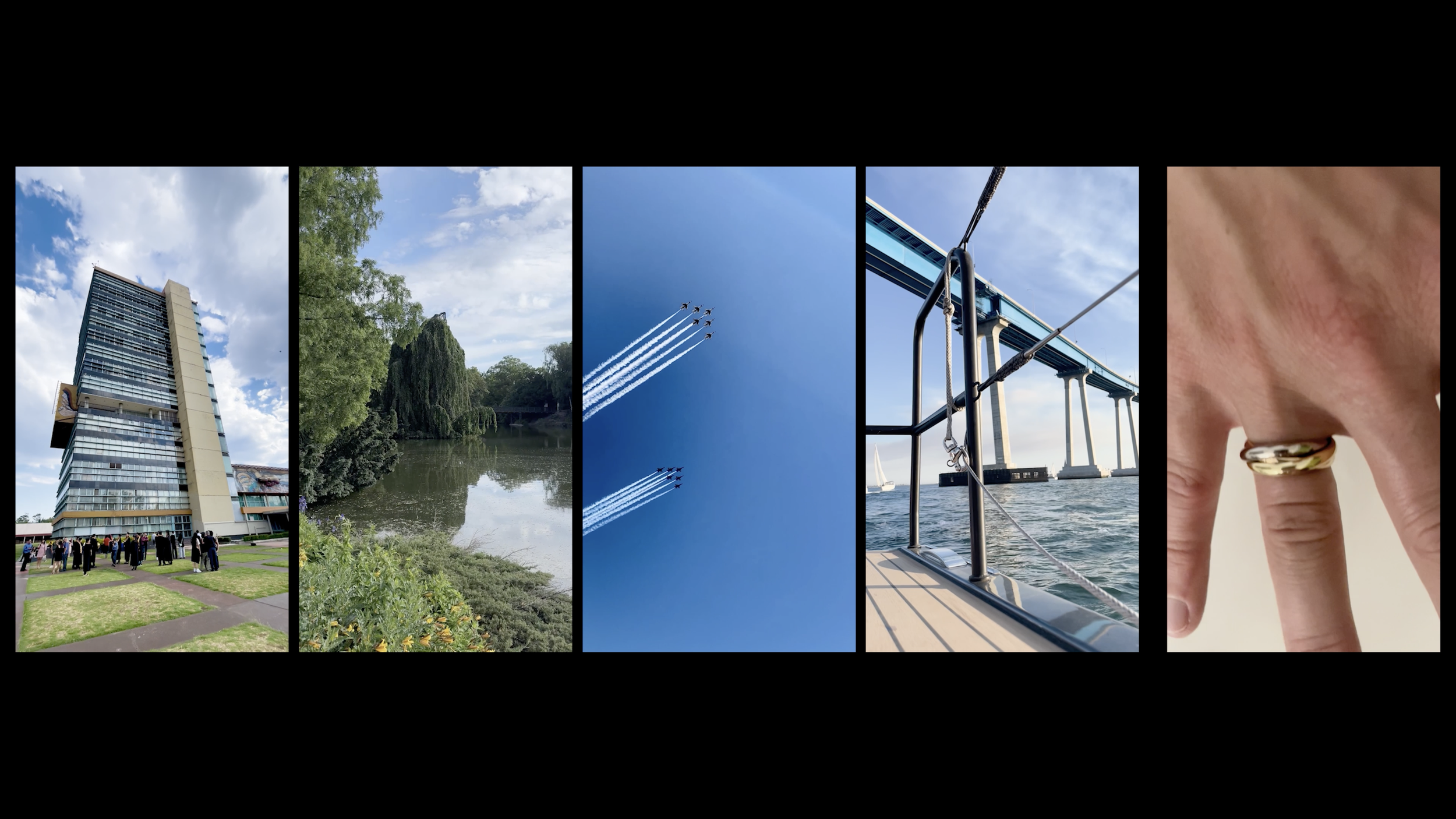
Ambient III records a sequence of environmental moments captured across different cities and years within the artist’s life. Each recording preserves a brief encounter with place — a building, a landscape, a sky, a bridge, or a fragment of the body — observed at the moment it registered as complete.
The images originate from locations including Mexico City, Copenhagen, New York’s Lower East Side, San Diego, and Saint Barthélemy. Though geographically dispersed, the recordings share the same visual condition: a still camera allowing the surrounding environment to move or settle within the frame.
Each video remains intentionally simple. The camera does not intervene. Movement occurs only through the world itself — clouds shifting, aircraft passing overhead, water moving beneath a bridge, or the subtle presence of the body entering the frame.
The work consists of five vertical recordings arranged in the recurring exclamation-point structure used throughout the Ezra corpus. Four videos form the vertical line. A fifth image functions as the punctuation mark.
The structure does not connect the locations.
It declares that they were kept.
Unlike Ambient II, which holds a single afternoon within one city, Ambient III assembles fragments of environmental attention gathered across multiple years and places. Each moment remains independent, yet their adjacency produces a quiet continuity.
The soundtrack accompanying the work is “Nineteen Hundred and Eighty Five” by Quantic.
The viewer is invited, through the opening data frame, to play and loop the track independently while watching the sequence.
Sound in this work does not narrate the images.
It establishes a durational field in which the fragments remain visible long enough to stabilize.
The relaxed, rhythmic motion of the track holds the images in suspension while the environments themselves remain largely still.
Within the broader Ezra system, Ambient III demonstrates how meaning often forms through dispersed attention rather than singular events. These moments were not recorded as narrative scenes or documentary records.
They were preserved because something in the environment briefly resolved.
The places remain separate.
The moments remain ordinary.
The punctuation asserts that they mattered.
Meaning emerges through repetition, attention, and time.
Credits
Recorded by Seth Dager
Edited by Seth Dager
-
Ambient IV
Video work — environmental duration
Ambient IV records a sequence of environmental moments captured across several cities and years within the artist’s life. Each recording preserves a brief encounter with place or presence — a street, a building, a landscape, an interior, or a fragment of the body — observed at the moment it registered as complete.
The images originate from Chelsea and Midtown in New York City, the Lower East Side, Lecce in Italy, and Mexico City. Though geographically dispersed, the recordings share the same visual condition: a still camera allowing the surrounding environment to settle within the frame.
Each video remains intentionally simple. The camera does not intervene. Movement occurs only through the world itself — pedestrians crossing a street, light shifting across architecture, the quiet scale of a library interior, or the subtle presence of the body entering the frame.
The work consists of five vertical recordings arranged in the recurring exclamation-point structure used throughout the Ezra corpus. Four videos form the vertical assertion. A fifth image functions as the punctuation mark.
The structure does not connect the locations.
It declares that they were kept.
Unlike Ambient II, which preserves a single afternoon in Chicago, and Ambient III, which assembles environmental fragments across years, Ambient IV gathers moments of attention that occurred within the ordinary flow of life — travel, walking through cities, looking upward, or noticing the body’s presence within time.
The soundtrack accompanying the work is “Lujon” by Henry Mancini.
The viewer is invited, through the opening data frame, to play and loop the track independently while watching the sequence.
Sound in this work does not narrate the images.
It establishes a durational atmosphere in which the fragments remain visible long enough to stabilize.
The composition’s restrained, cinematic rhythm allows the images to remain suspended between observation and memory.
Within the broader Ezra system, Ambient IV demonstrates how meaning often gathers quietly within everyday encounters with place — moments that would otherwise pass without record.
The locations remain separate.
The moments remain ordinary.
The punctuation asserts that they were noticed.
Meaning emerges through duration, attention, and time.
Credits
Recorded by Seth Dager
Edited by Seth Dager
-
Horizons Dorés
Short film — durational narrative output
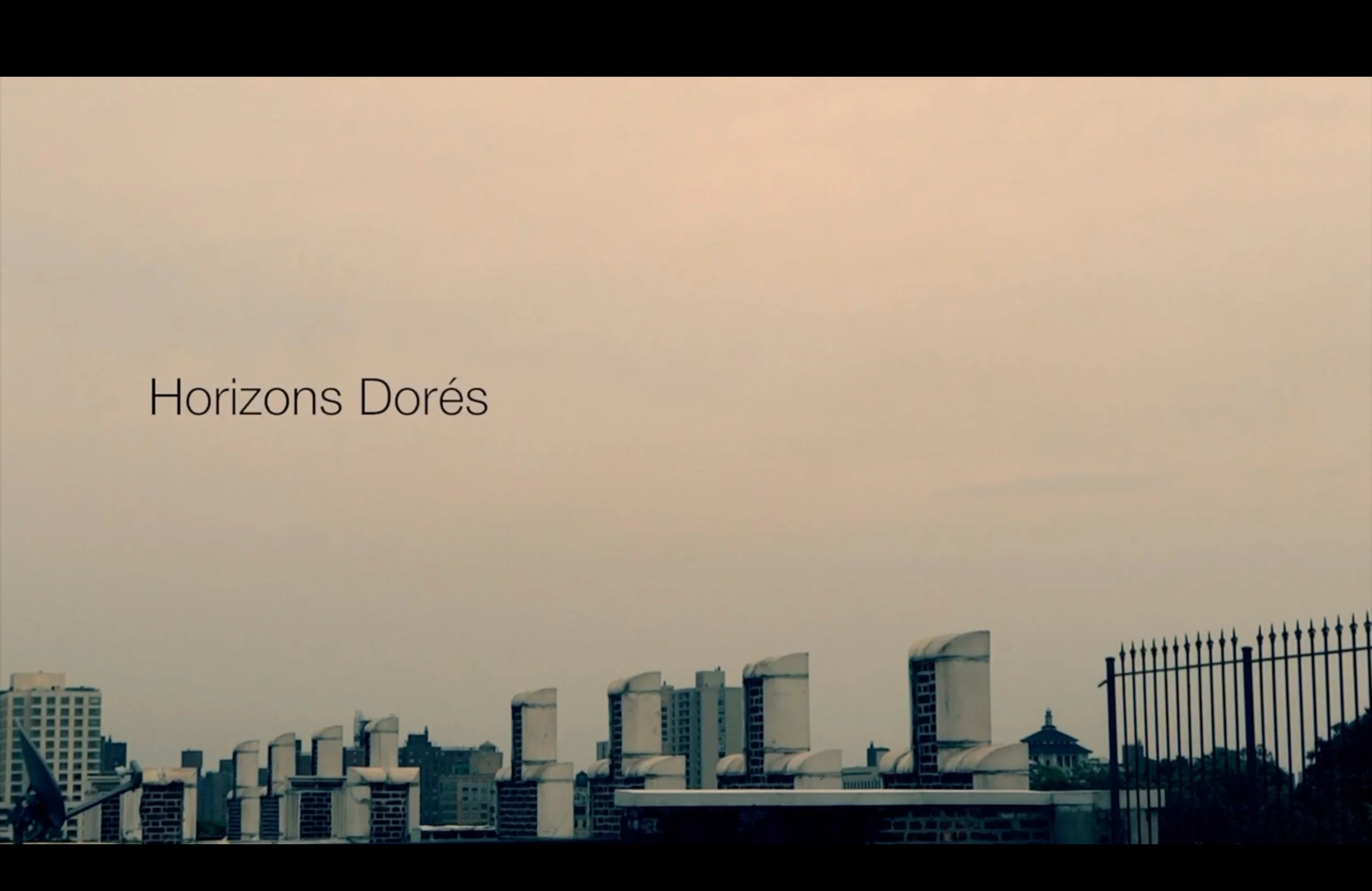
Horizons Dorés is a short film created in the summer of 2012 on the rooftop of the apartment building where Seth Dager was living on Central Park North in New York City. Shot during the same period as Les Fausses Coïncidences, the work shifts away from narrative fiction and toward atmospheric documentation.
The film functions loosely as a music video set to “Flutes” by Hot Chip.
Across its duration, the camera alternates between two visual registers: wide establishing shots of the surrounding cityscape and quiet observational footage of Dager and Emmanuel Libet moving across the rooftop space. The two appear separately and together, pacing, sitting, and crossing the open surface as the day gradually moves toward evening.
The environment is central to the work.
On the day the film was shot, the air over Manhattan was unusually humid and hazy. The sky carried a soft, diffused glow that lingered through sunset, flattening the skyline into a warm, atmospheric field. In the final edit, a subtle color grade was used to preserve and extend this tonal quality, emphasizing the muted gold haze that gave the film its title.
Rather than constructing a narrative, Horizons Dorés preserves a shared moment.
The rooftop becomes both stage and vantage point—an elevated threshold between private life and the surrounding city. Movement across the space is casual and unstructured. The figures do not perform actions so much as inhabit the environment while the music carries the temporal rhythm of the piece.
Within the broader Ezra practice, Horizons Dorés can be understood retrospectively as an early cinematic experiment in durational presence. The work documents a lived moment—friendship, atmosphere, and place—through restrained observation rather than story or explanation.
The film does not attempt to dramatize the moment.
It holds it long enough for its tone to remain.
In this way, Horizons Dorés functions as a quiet tribute to a shared summer and to a friendship seen through the authorial lens of the camera.
Credits
Directed by Seth Dager
Edited by Seth Dager
Featuring Seth Dager & Emmanuel Libet
Music:
“Flutes” — Hot Chip
-
Letters (Falling)
Video work — typographic sequence
Letters (Falling) began as a runway projection created during my time working in fashion, where large-scale video environments were used to frame the presentation of a collection.
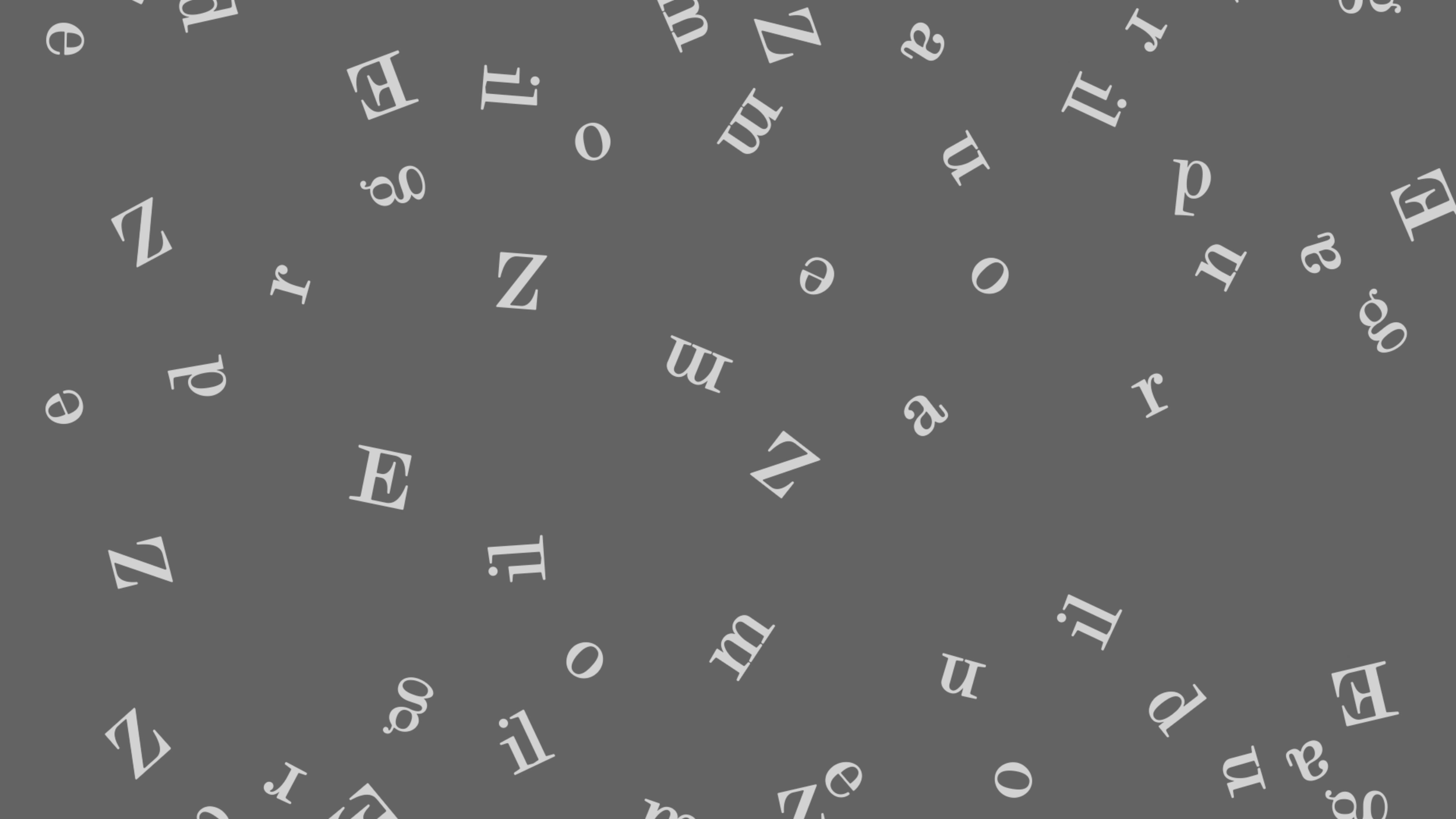
Rather than presenting a static brand mark, the projection broke the logo into its individual typographic components and allowed the letters to fall continuously across the screen.
Over time the fragments accumulate, overlap, and drift through the frame, remaining recognizable even as the original structure dissolves.
After several minutes of continuous motion, the dispersed elements resolve back into a single recognizable form.
The piece explores how identity can remain legible even when its structure is fragmented.
Rather than appearing instantly, recognition emerges gradually through duration and repetition.
Within the broader Ezra system, Letters (Falling) can be understood retrospectively as an early structural experiment in how meaning persists even as its components disperse.
The letters remain constant.
Their arrangement changes.
Meaning emerges through duration, fragmentation, and return.
Credits
Created by Seth Dager
-
Playlist I
Video work — sonic duration
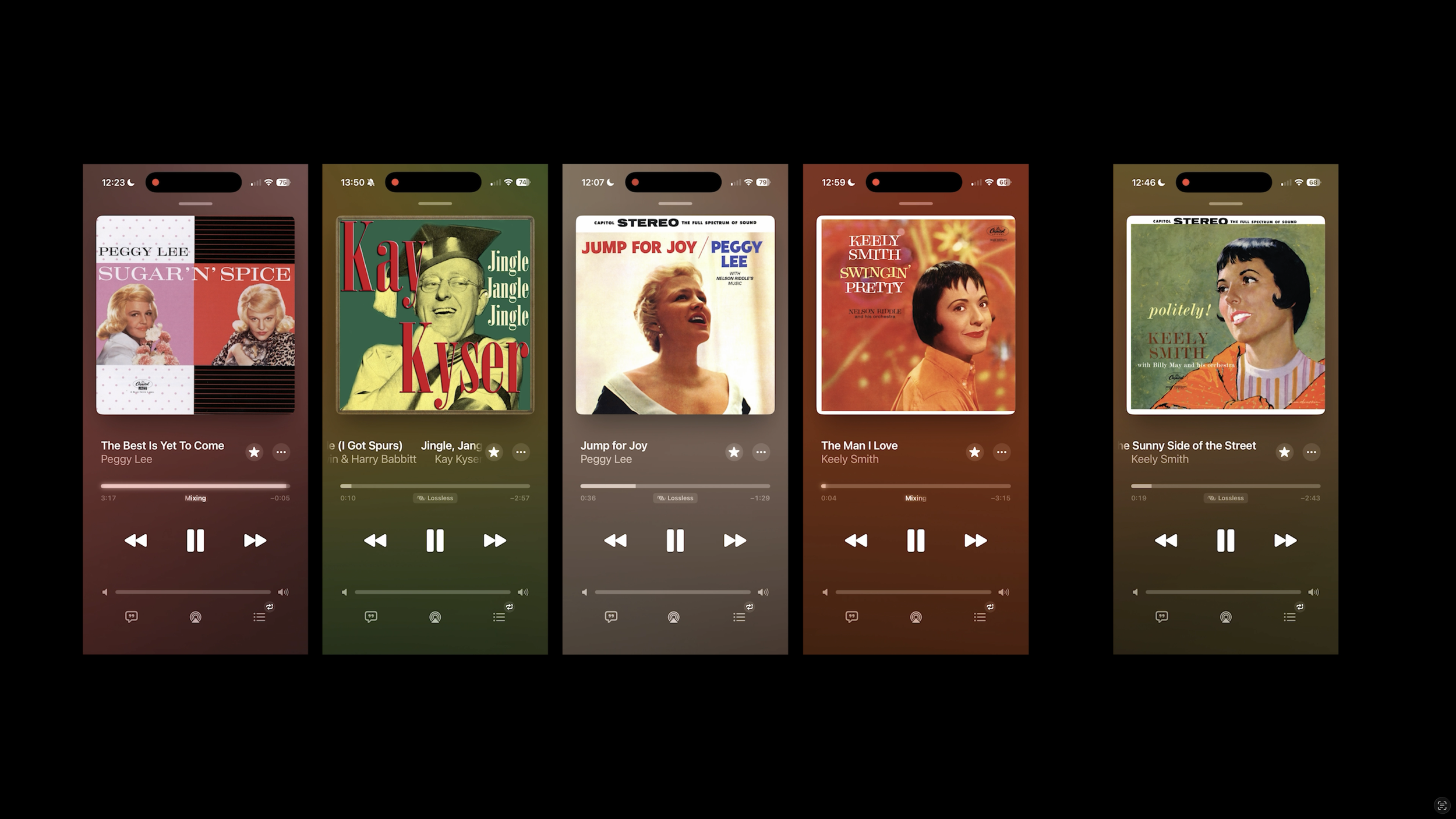
Playlist I records a set of songs that function as emotional anchors within the Ezra system. Rather than presenting the music itself, the work documents the act of sustaining a sonic environment through repetition.
The piece consists of five screen recordings captured directly from the artist’s iPhone while playing songs through the Apple Music interface. Each recording shows a different track beginning, looping, and restarting through the tactile gestures used to maintain playback.
The recordings were originally captured continuously for nearly fifteen minutes and later condensed into a nine-minute sequence. Within this interval each track loops multiple times, producing a layered rhythm of repetition and interruption.
Rather than editing away the gestures that control the music, the video preserves them. Touches, pauses, and restarts remain visible, documenting the behavior required to sustain a sonic state rather than presenting a finished playlist.
The five songs form Playlist I, a canonical grouping of tracks the artist repeatedly returns to when seeking emotional stability or grounding.
The viewer is invited, through the opening data frame, to play and loop the songs independently while watching the video. Sound in this work is not illustrative. It functions as a structural condition through which duration and attention stabilize.
As the sequence progresses, each screen recording reaches the end of its capture and disappears from the frame — sometimes mid-song, sometimes between loops. The composition gradually dissolves until the final recording vanishes and the screen turns black.
After a brief pause, the video begins again.
The songs return.
The system resets.
Within the broader Ezra system, Playlist I can be understood as a visual encoding of sonic duration — a record of how music is used to regulate emotional state and maintain continuity through repetition.
The songs remain constant.
The interface records the act of return.
Meaning emerges through repetition, attention, and time.
Credits
Recorded by Seth Dager
Edited by Seth Dager
-
Zooms - Return I
Durational video work — Zoom series
Return I is part of the Zooms video series, a set of durational works exploring how context forms, dissolves, and reorganizes through movement, repetition, and time.
The work presents three vertical video frames simultaneously. The first records the artist’s arrival at LaGuardia Airport on 03/02/26 — his first return to New York City after relocating to The Rigley Field. The second and third were recorded one week later, on 03/09/26, while leaving New York and returning to The Rigley Field.
This narrative structure is introduced in the opening frame and remains embedded in the sequence.
Across each frame, the camera slowly zooms inward toward its subject. Once the zoom reaches its closest point, the movement reverses, returning the image to its original wide view. Each frame continues looping through this cycle of approach and return for the full nine-minute duration.
Because the loops operate at slightly different lengths, the synchrony established at the outset gradually breaks apart. The three moments drift out of phase, recombine, and separate again over time.
Arrival and departure no longer hold as fixed positions.
Return becomes cyclical rather than linear.
For the first time within the Zooms series, the work also incorporates a musical soundtrack. The opening frame subtly invites the viewer to loop “7-29-04 The Day Of” by David Holmes (from Ocean’s Twelve) while watching the sequence. The track functions as more than accompaniment: its title operates like a cultural timestamp. In the film, the song marks the day of the heist; in the context of the work, it behaves like a temporal marker — a date embedded in sound. Released in 2004, the year referenced in its title, the track permanently anchors itself to that moment in time, mirroring the way the Ezra system preserves context through temporal metadata.
Image and sound gradually fall in and out of alignment as the loops drift.
Within the broader Zooms series, Return I introduces the logic of recurrence: context is not simply revealed or withdrawn, but repeatedly revisited. The work holds New York and The Rigley Field within the same durational field, allowing movement between them to continue long after the original journey has ended.
Meaning does not settle in one place.
It returns.
Credits
Recorded by Seth Dager
Edited by Seth Dager
-
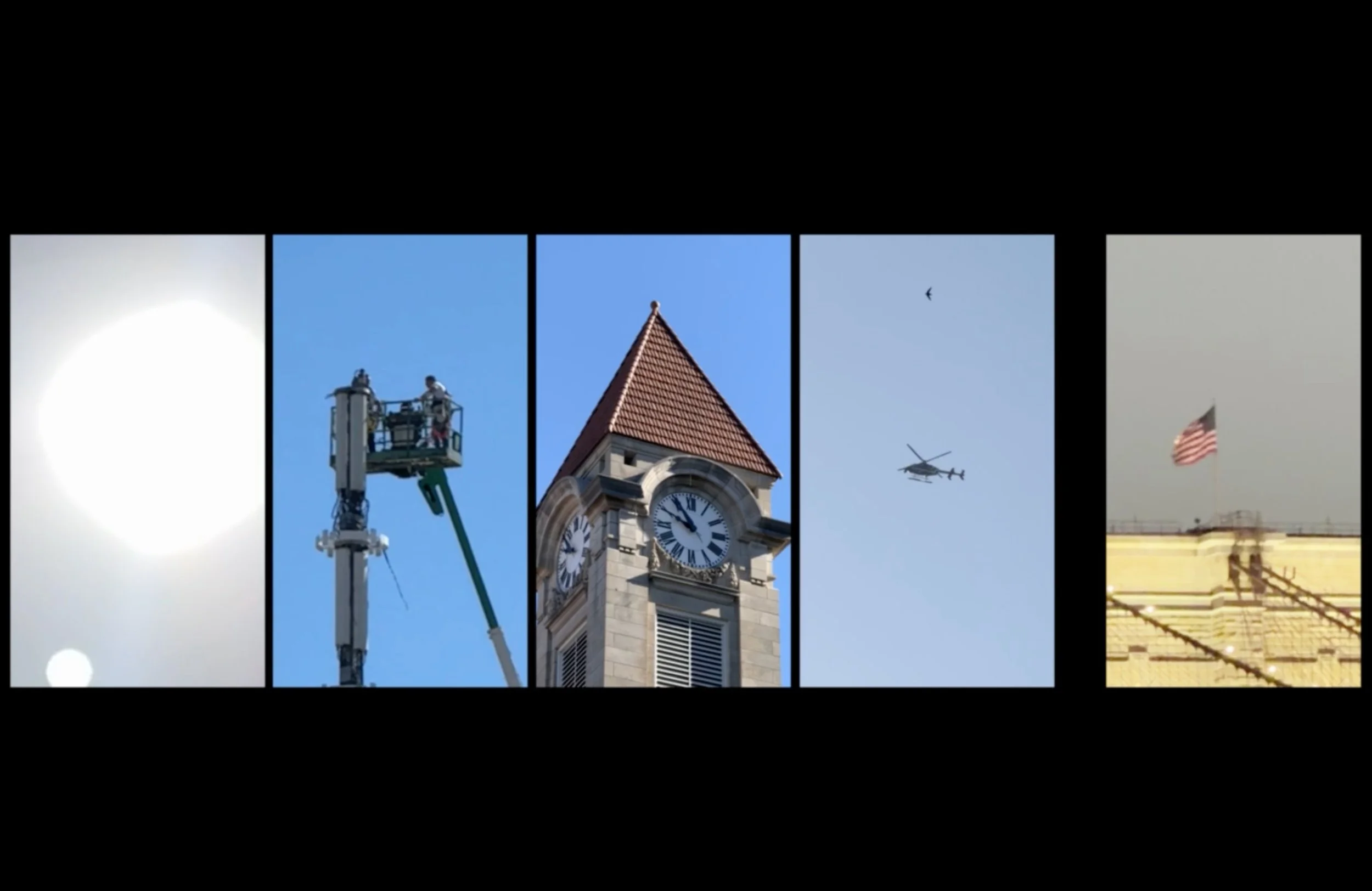
Zooms - Sky I
Durational video work — Zoom series
Sky I is part of the ongoing Zooms video series, a set of durational works that examine how context changes perception over time.
Each work in the series begins with multiple video frames presented simultaneously. At the start of the sequence, the viewer is positioned at a distance: the subjects appear abstract, ambiguous, or even unrecognizable within their environment.
Across the opening moments of the piece, each video slowly zooms inward toward its subject.
Once the subject becomes visible, the zoom stops. The videos then continue looping for the remainder of the work’s duration.
In Sky I, the five frames capture fragments of the sky and surrounding city environment — the sun, architectural details, a clock tower, a helicopter, and an American flag. What initially reads as pure abstraction gradually resolves into recognizable objects as the zoom reveals context.
But the work does not stabilize there.
Each loop operates at a slightly different duration. Because of these differences, the synchronized rhythm established at the beginning slowly dissolves as the video continues. Over the course of the nine-minute runtime, the timing of the frames drifts apart and recombines unpredictably.
The result is a subtle temporal spiral.
Images that once aligned fall out of phase.
Moments repeat against different visual neighbors.
Context continually rearranges itself.
What begins as a simple act of revealing a subject becomes an experiment in duration, rhythm, and perceptual instability.
Within the broader Ezra system, the Zooms series demonstrates how meaning shifts once context is introduced. Recognition does not resolve an image permanently; it only provides a temporary orientation before time begins reorganizing perception again.
The work becomes quietly hypnotic.
The viewer watches not only the images themselves, but the changing relationships between them as time passes.
Meaning does not settle.
It circulates.
Credits
Recorded by Seth Dager
Edited by Seth Dager
-
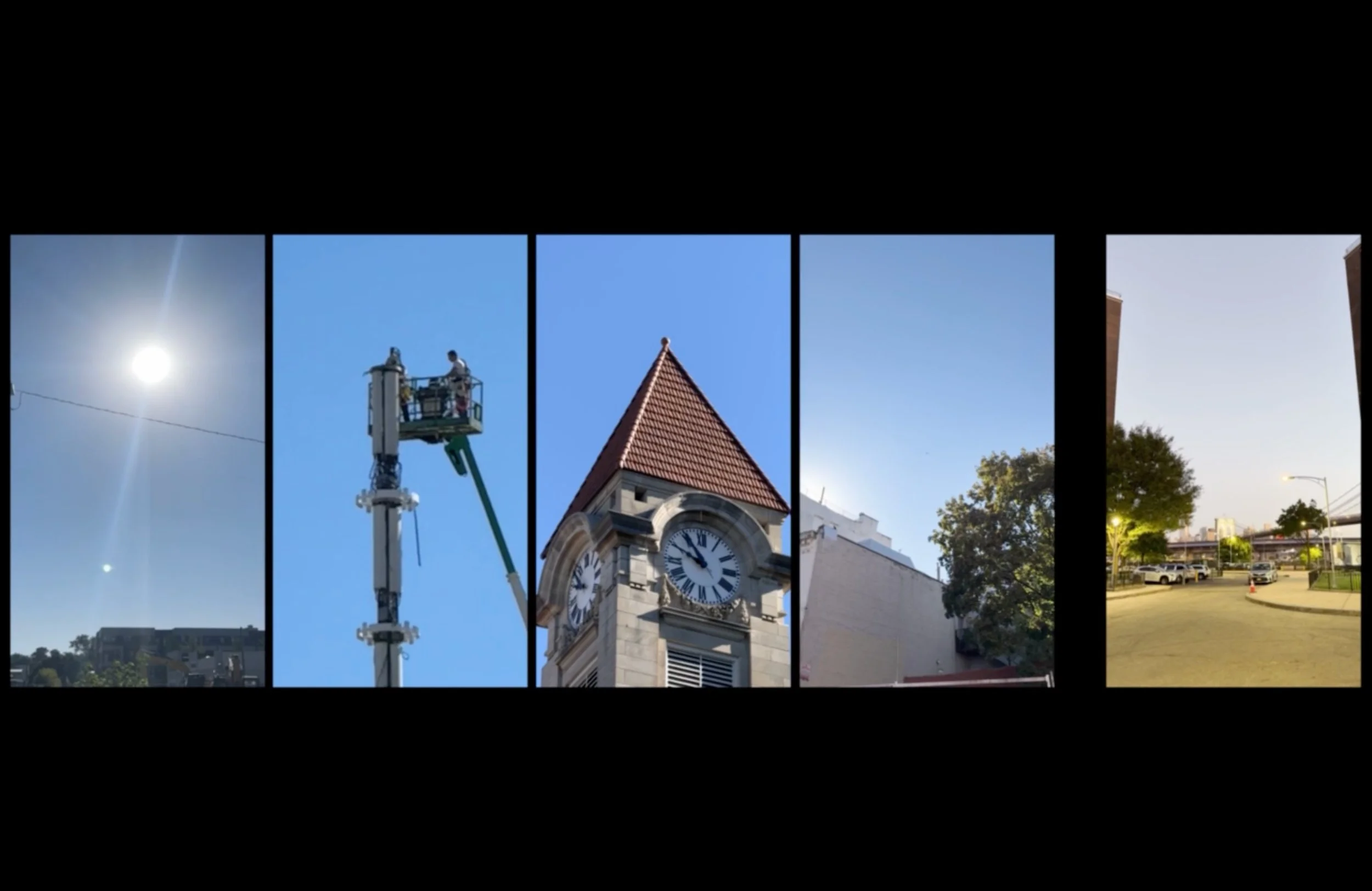
Zooms - Sky II
Durational video work — Zoom series
Sky II is the companion work to Sky I within the Zooms video series.
The structure of the piece is identical, but the direction of movement is reversed.
Where Sky I begins with distant, ambiguous images that gradually zoom inward to reveal their subjects, Sky II begins in close proximity. The viewer initially encounters recognizable details — architectural fragments, sky conditions, and urban elements — presented in five simultaneous frames.
Over the opening moments of the video, each frame slowly zooms outward.
Recognition gives way to distance.
As the images recede, the clarity established at the beginning begins to dissolve. The subjects that were once legible gradually merge back into the surrounding field of sky and city, returning to a state of visual ambiguity.
As in Sky I, the zoom concludes early in the work’s runtime. Each frame then loops continuously for the remainder of the nine-minute duration.
Because each loop operates at a slightly different length, the synchronization between the frames slowly drifts apart. The relationships between the images continually reorganize themselves as the piece unfolds.
Moments align briefly, separate, and reappear in new combinations.
In this way, Sky II inverts not only the movement of the zoom but also the viewer’s experience of context. Rather than discovering meaning through increasing proximity, the work gradually removes the conditions that made recognition possible.
What was once visible becomes abstract again.
Within the broader Zooms series, Sky II demonstrates the reciprocal nature of perception: context can clarify an image, but it can also disappear. Meaning is not fixed within the frame itself; it emerges through distance, duration, and relationship.
The two works function together as a perceptual loop.
One reveals the subject.
The other releases it.
Credits
Recorded by Seth Dager
Edited by Seth Dager
-
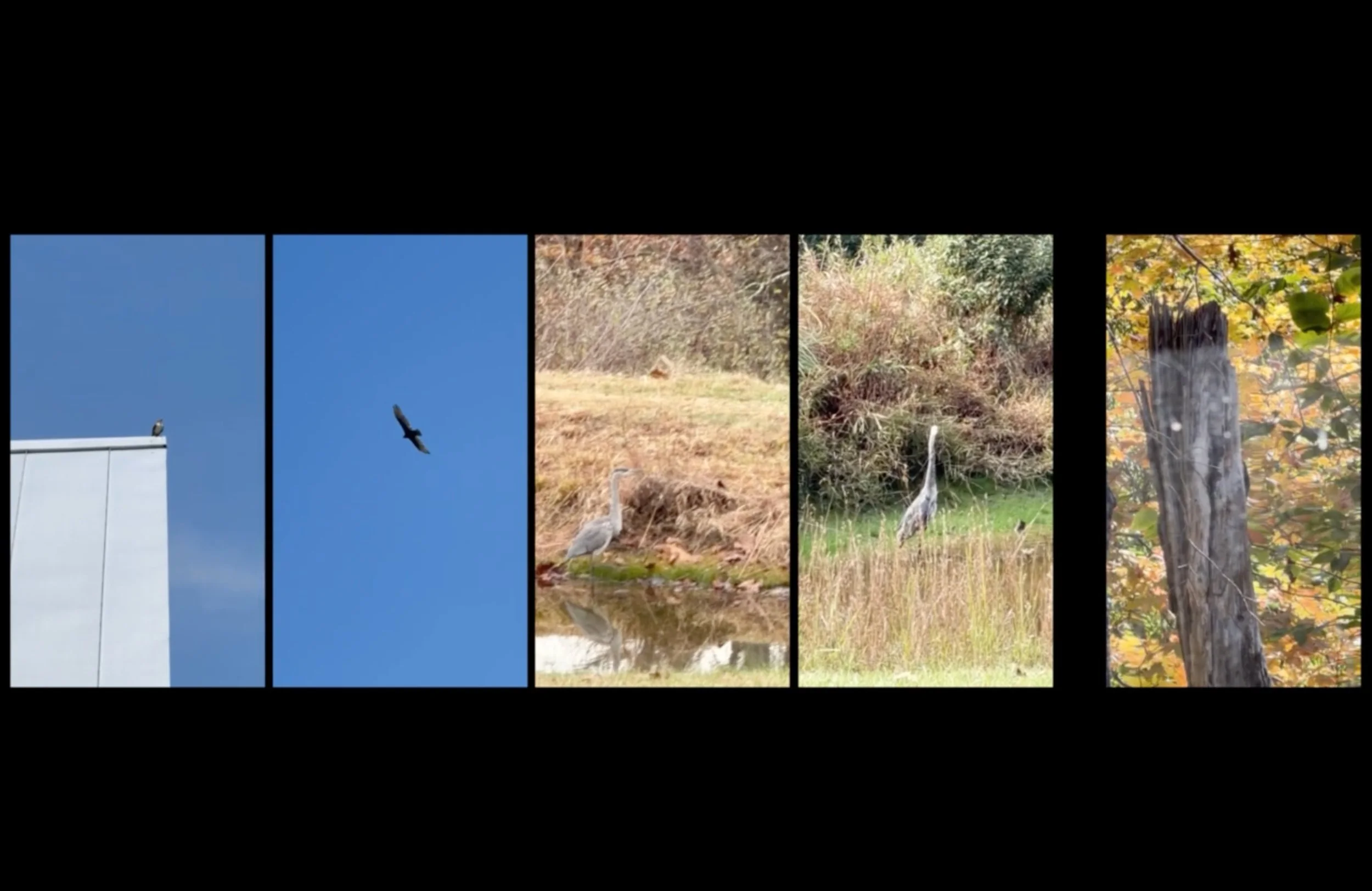
Zooms - Birds I
Durational video work — Zoom series
Birds I is part of the Zooms video series, a set of durational works examining how perception shifts when distance, context, and time are allowed to reorganize an image.
The work presents five vertical video frames simultaneously. Each frame begins from a distant vantage point where the subject appears small, ambiguous, or nearly invisible within the surrounding sky and landscape.
In this piece, the subjects are birds observed from afar.
Unlike Sky I and Sky II, where all zooms occur simultaneously, Birds I introduces a sequential structure.
The first frame slowly zooms inward toward its subject. Once the zoom completes, that frame begins looping while the next frame begins its own zoom. Each successive frame activates in this way, gradually building the full composition across the screen.
The work therefore unfolds in stages.
One image becomes clear.
Then another.
Then another.
By the midpoint of the video all frames are active and looping together, producing a layered field of repeated motion.
The structure then reverses.
One by one, the loops conclude and disappear, gradually returning the screen to its original emptiness.
The composition builds and dissolves.
The birds themselves are incidental to the system. They are not symbolic figures or narrative actors. They are simply distant subjects that become briefly legible through proximity before receding again into the surrounding environment.
Within the broader Zooms series, Birds I demonstrates another dimension of contextual perception: recognition does not arrive all at once. It accumulates gradually, frame by frame, and then disappears in the same measured way.
The viewer witnesses both the construction and the disappearance of context.
Meaning appears slowly.
Then it leaves.
Credits
Recorded by Seth Dager
Edited by Seth Dager
-
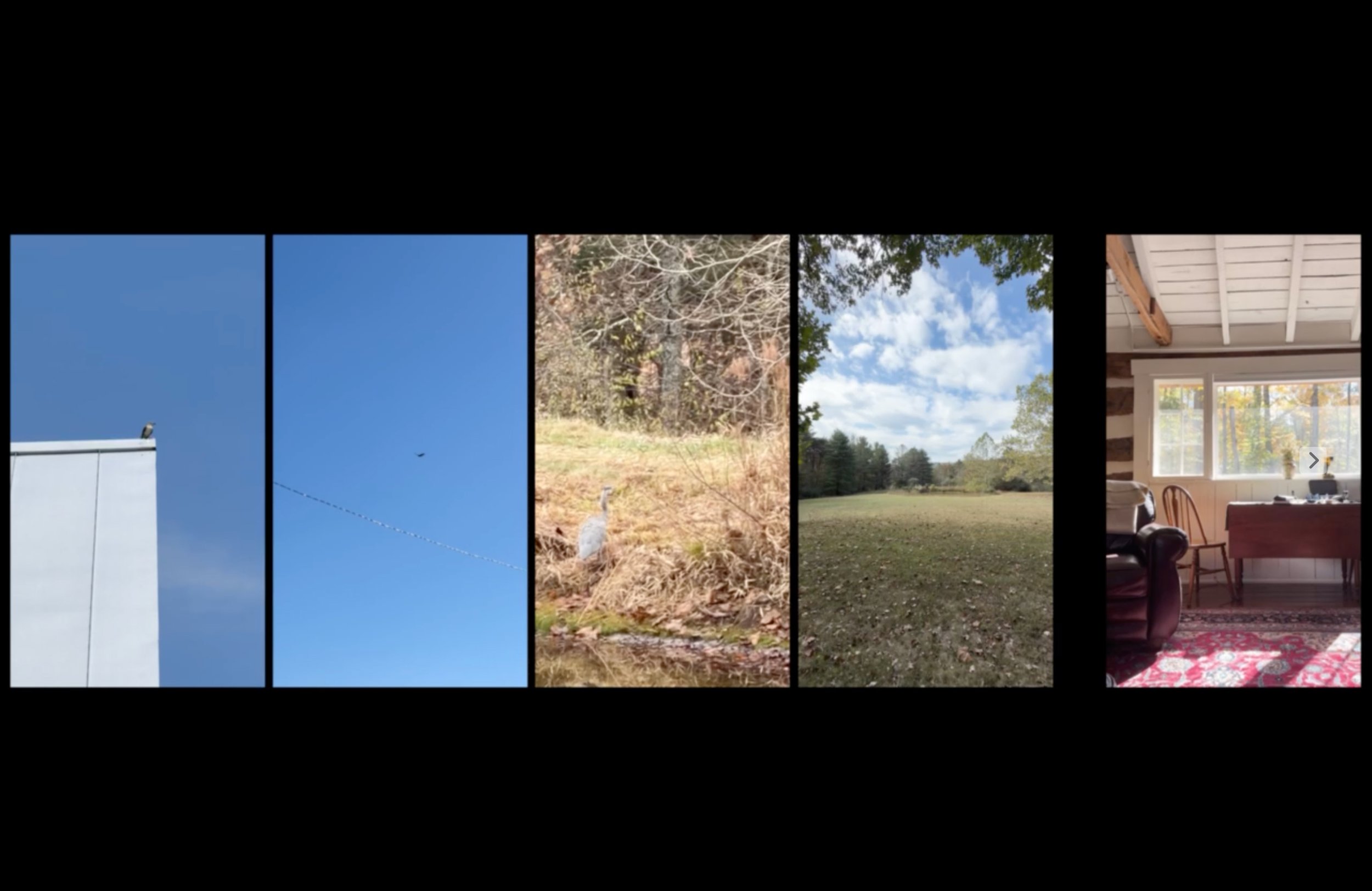
Zooms - Birds II
Durational video work — Zoom series
Birds II is the companion work to Birds I within the Zooms video series.
The structure of the piece mirrors the earlier work but unfolds in reverse.
Where Birds I gradually builds its composition frame by frame, Birds II begins fully assembled. Five vertical video frames appear simultaneously, each containing a zoomed-in view of a bird observed from a distance.
Across the opening moments of the video, the frames begin to disengage one by one.
The first frame slowly zooms outward until the subject dissolves back into the surrounding sky. Once the zoom completes, that frame disappears while the remaining frames continue looping. Each subsequent frame follows the same process, gradually reducing the composition until only a single image remains.
Eventually, that final frame also recedes.
The screen returns to the empty field from which the work began.
As in Birds I, the subjects are birds encountered at a distance—small figures that momentarily become legible through proximity before disappearing again into the broader environment. The work does not treat them as symbols or narrative actors. They function as transient points of attention within a much larger visual field.
Within the broader Zooms series, Birds II completes the structural cycle introduced in Birds I. Rather than constructing context step by step, the work begins with full recognition and gradually removes the conditions that made that recognition possible.
The viewer witnesses context dissolving in real time.
What was visible becomes distant.
What was clear becomes abstract again.
Meaning does not collapse abruptly.
It fades.
Credits
Recorded by Seth Dager
Edited by Seth Dager