Ambient IV
Video work — environmental duration
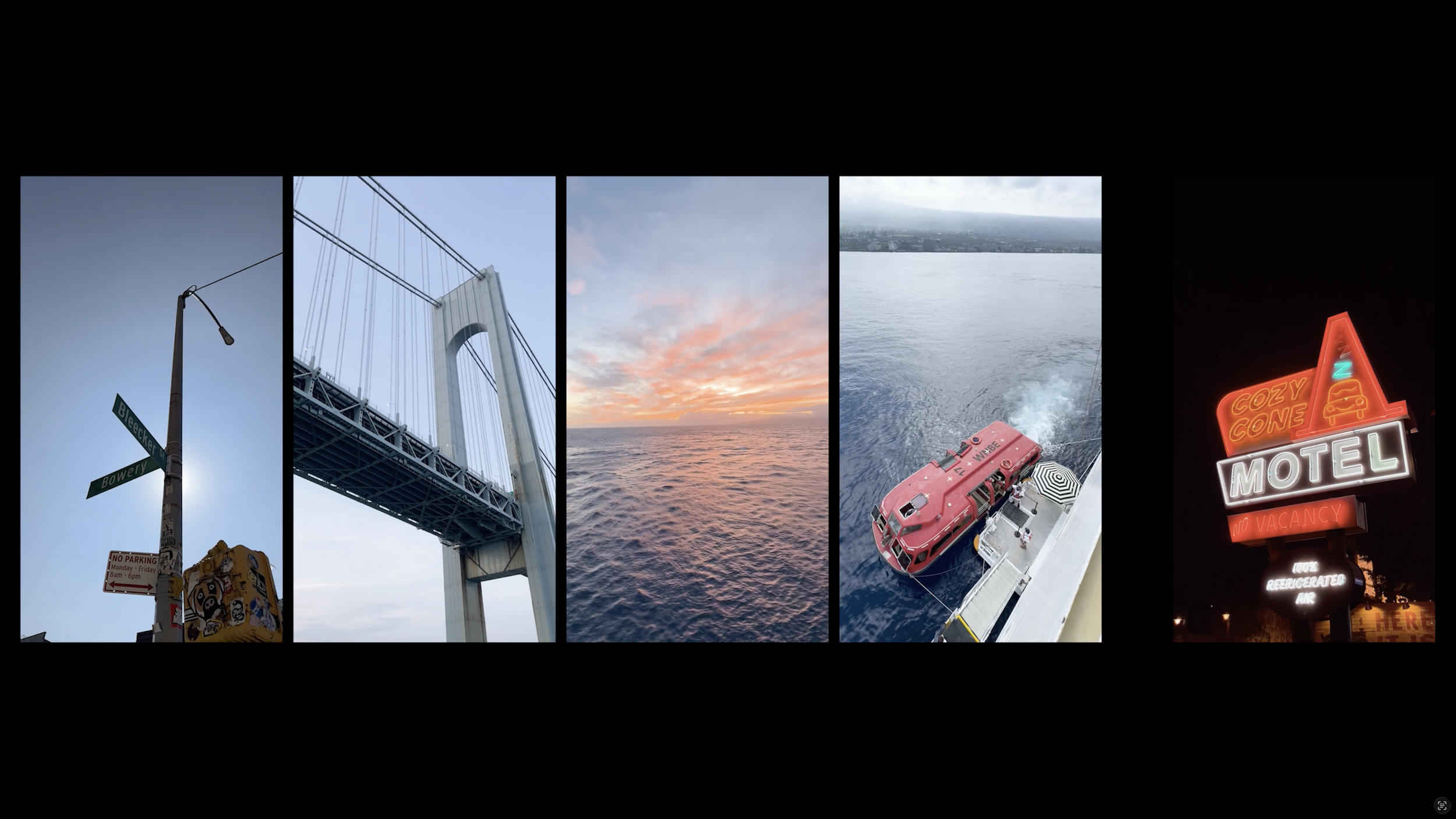
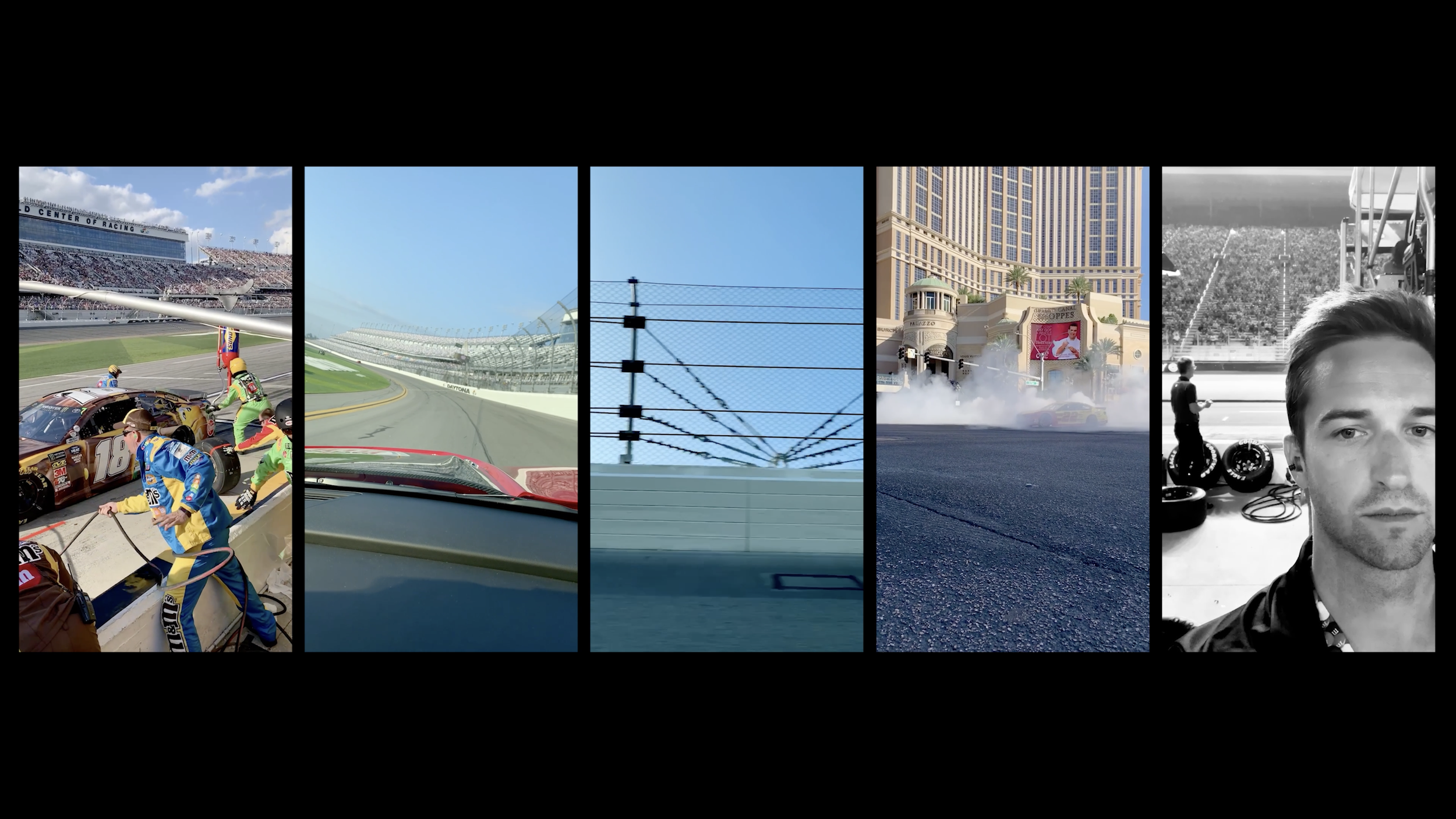
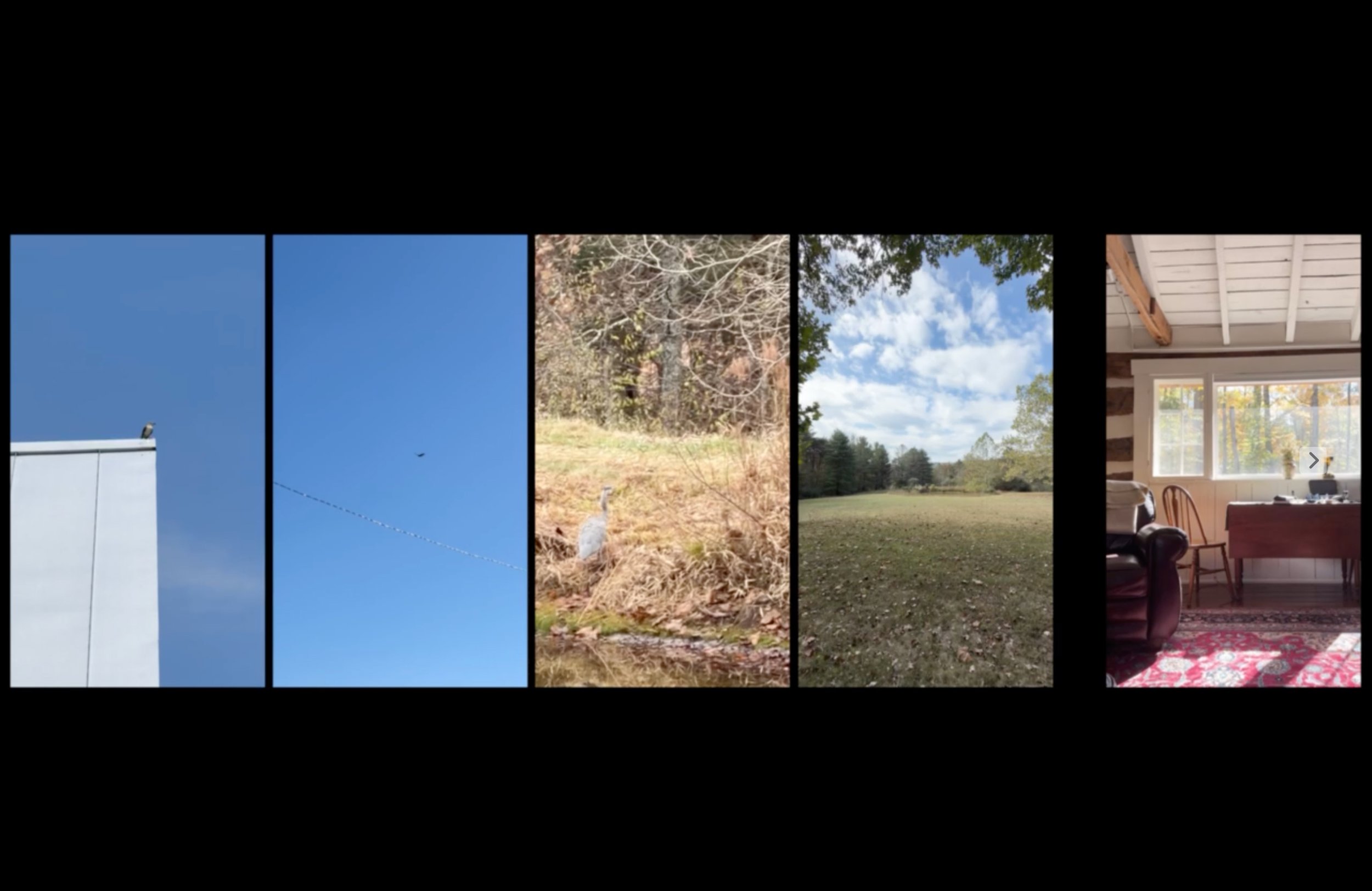
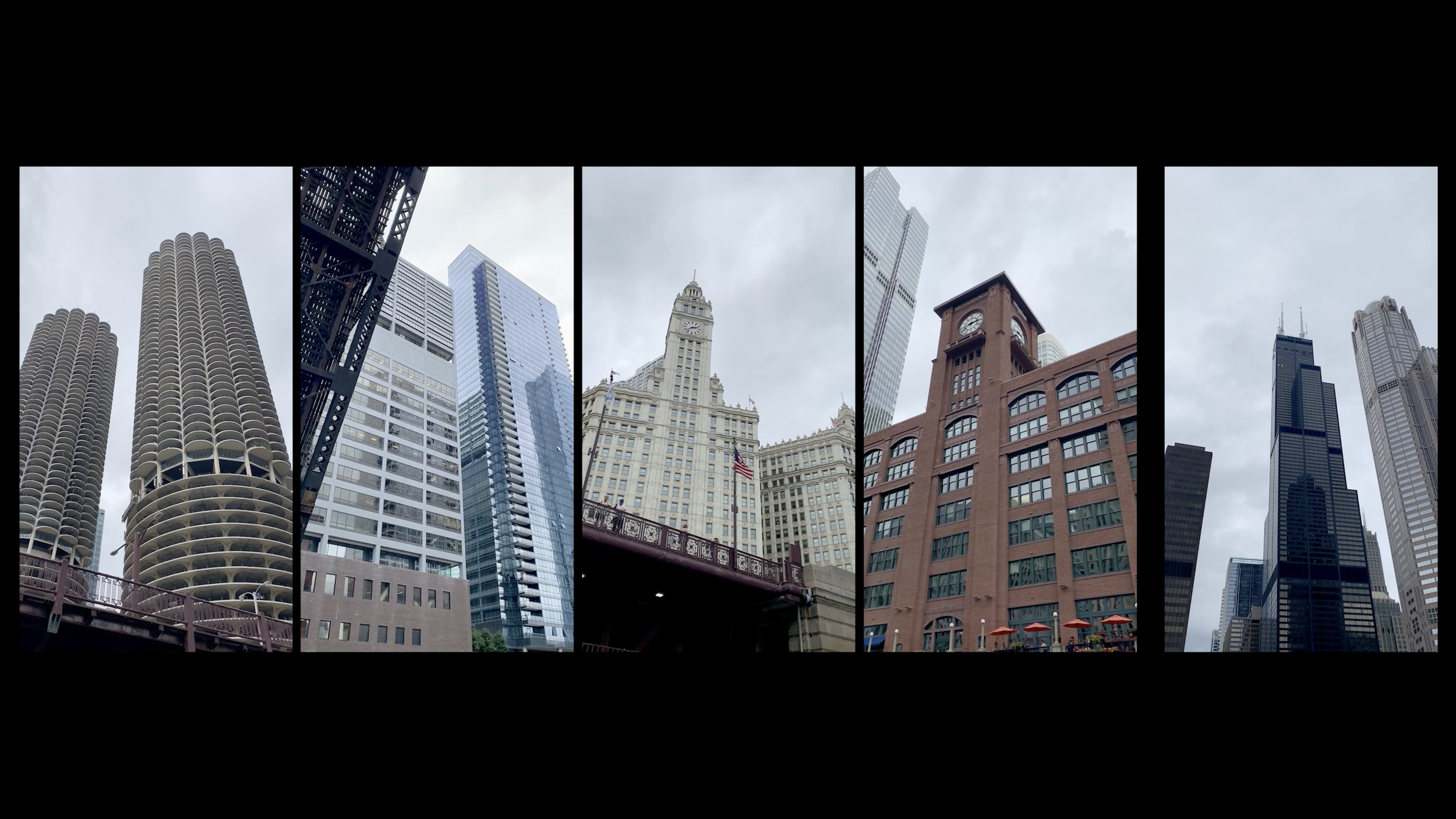
Ambient IV records a sequence of environmental moments captured across several cities and years within the artist’s life. Each recording preserves a brief encounter with place or presence — a street, a building, a landscape, an interior, or a fragment of the body — observed at the moment it registered as complete.
The images originate from Chelsea and Midtown in New York City, the Lower East Side, Lecce in Italy, and Mexico City. Though geographically dispersed, the recordings share the same visual condition: a still camera allowing the surrounding environment to settle within the frame.
Each video remains intentionally simple. The camera does not intervene. Movement occurs only through the world itself — pedestrians crossing a street, light shifting across architecture, the quiet scale of a library interior, or the subtle presence of the body entering the frame.
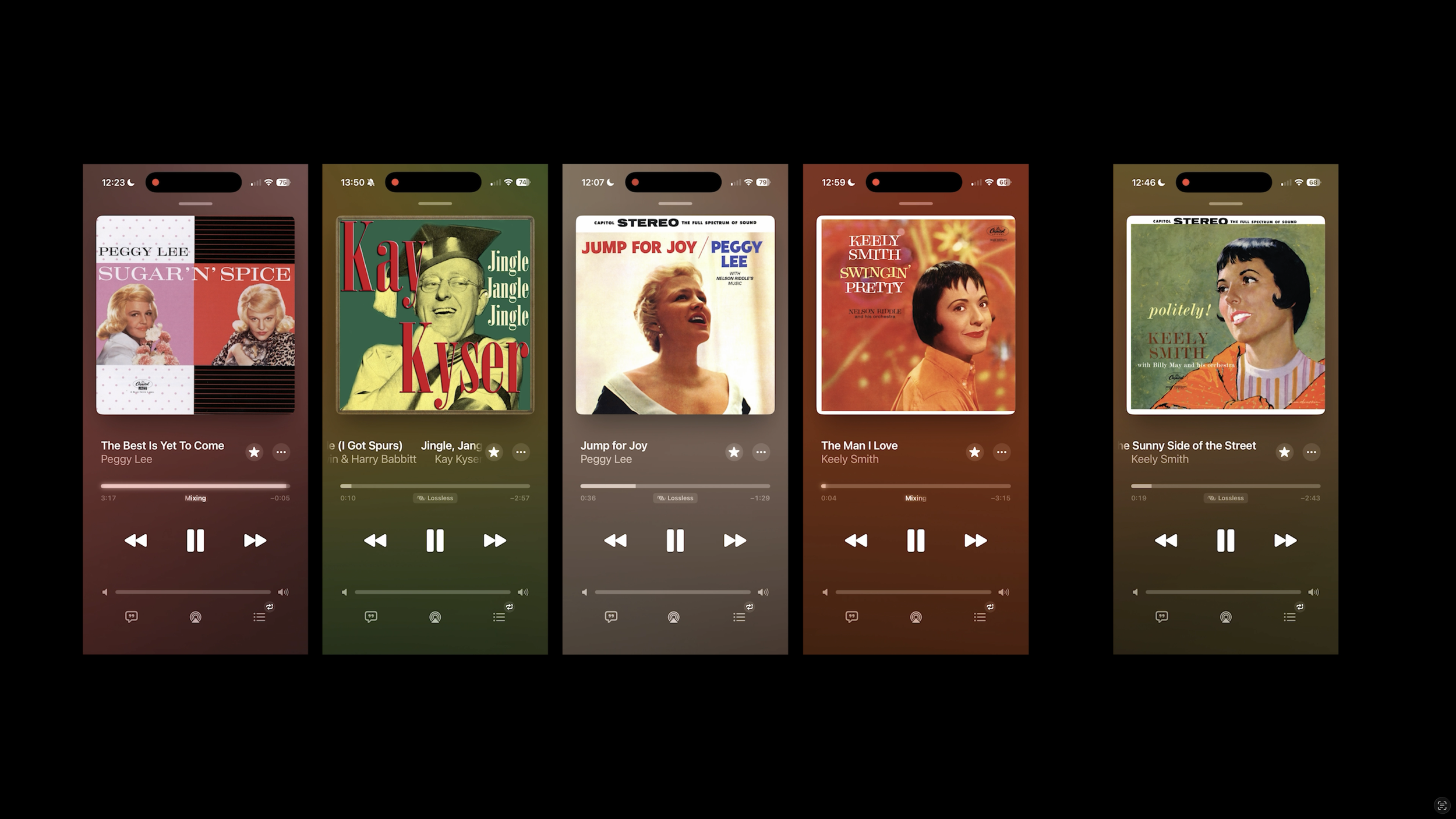
The work consists of five vertical recordings arranged in the recurring exclamation-point structure used throughout the Ezra corpus. Four videos form the vertical assertion. A fifth image functions as the punctuation mark.
The structure does not connect the locations.
It declares that they were kept.
Unlike Ambient II, which preserves a single afternoon in Chicago, and Ambient III, which assembles environmental fragments across years, Ambient IV gathers moments of attention that occurred within the ordinary flow of life — travel, walking through cities, looking upward, or noticing the body’s presence within time.
The soundtrack accompanying the work is “Lujon” by Henry Mancini.
The viewer is invited, through the opening data frame, to play and loop the track independently while watching the sequence.
Sound in this work does not narrate the images.
It establishes a durational atmosphere in which the fragments remain visible long enough to stabilize.
The composition’s restrained, cinematic rhythm allows the images to remain suspended between observation and memory.
Within the broader Ezra system, Ambient IV demonstrates how meaning often gathers quietly within everyday encounters with place — moments that would otherwise pass without record.
The locations remain separate.
The moments remain ordinary.
The punctuation asserts that they were noticed.
Meaning emerges through duration, attention, and time.
Credits
Recorded by Seth Dager
Edited by Seth Dager