
Papers (Served) (2025)
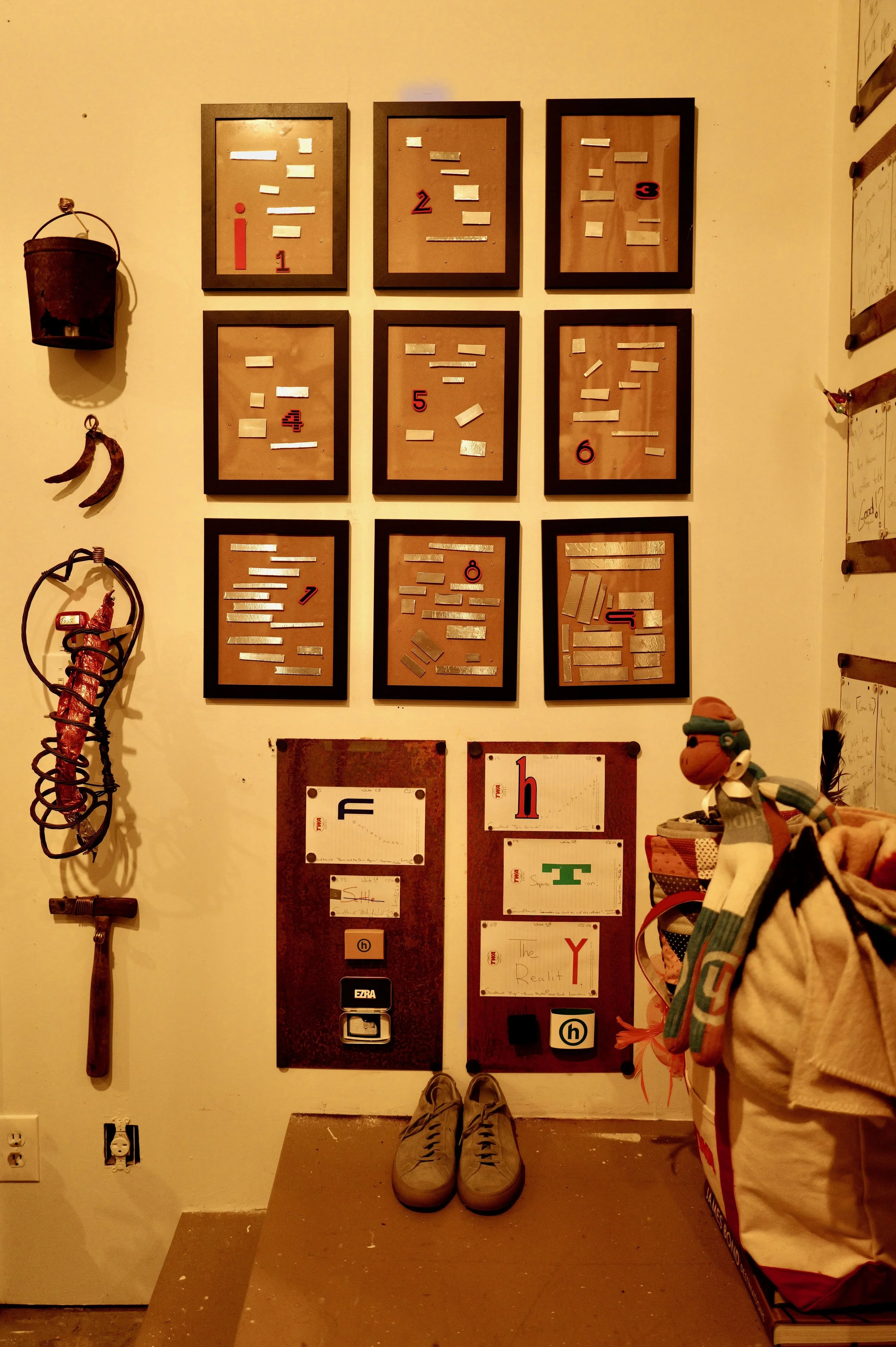
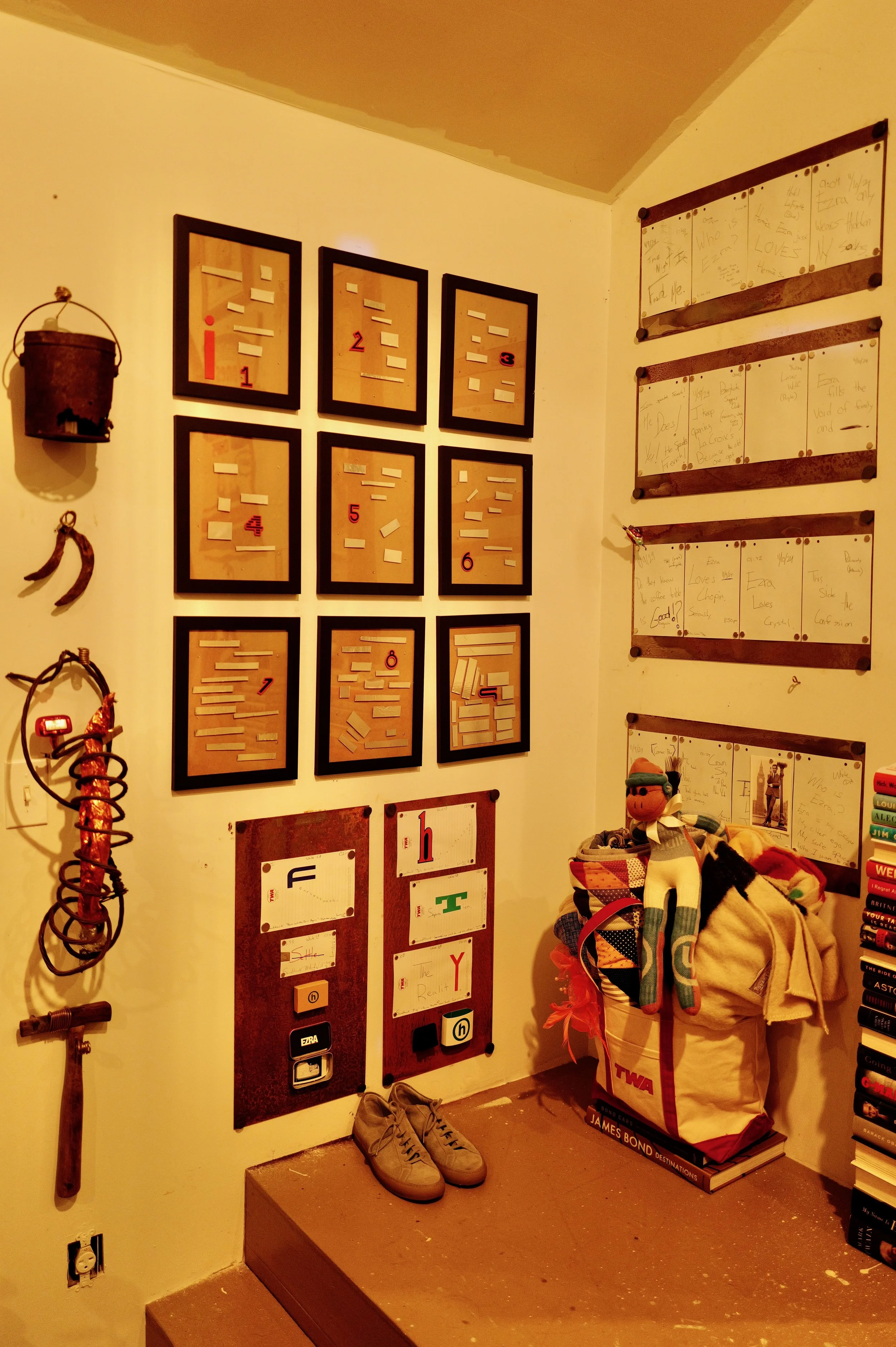
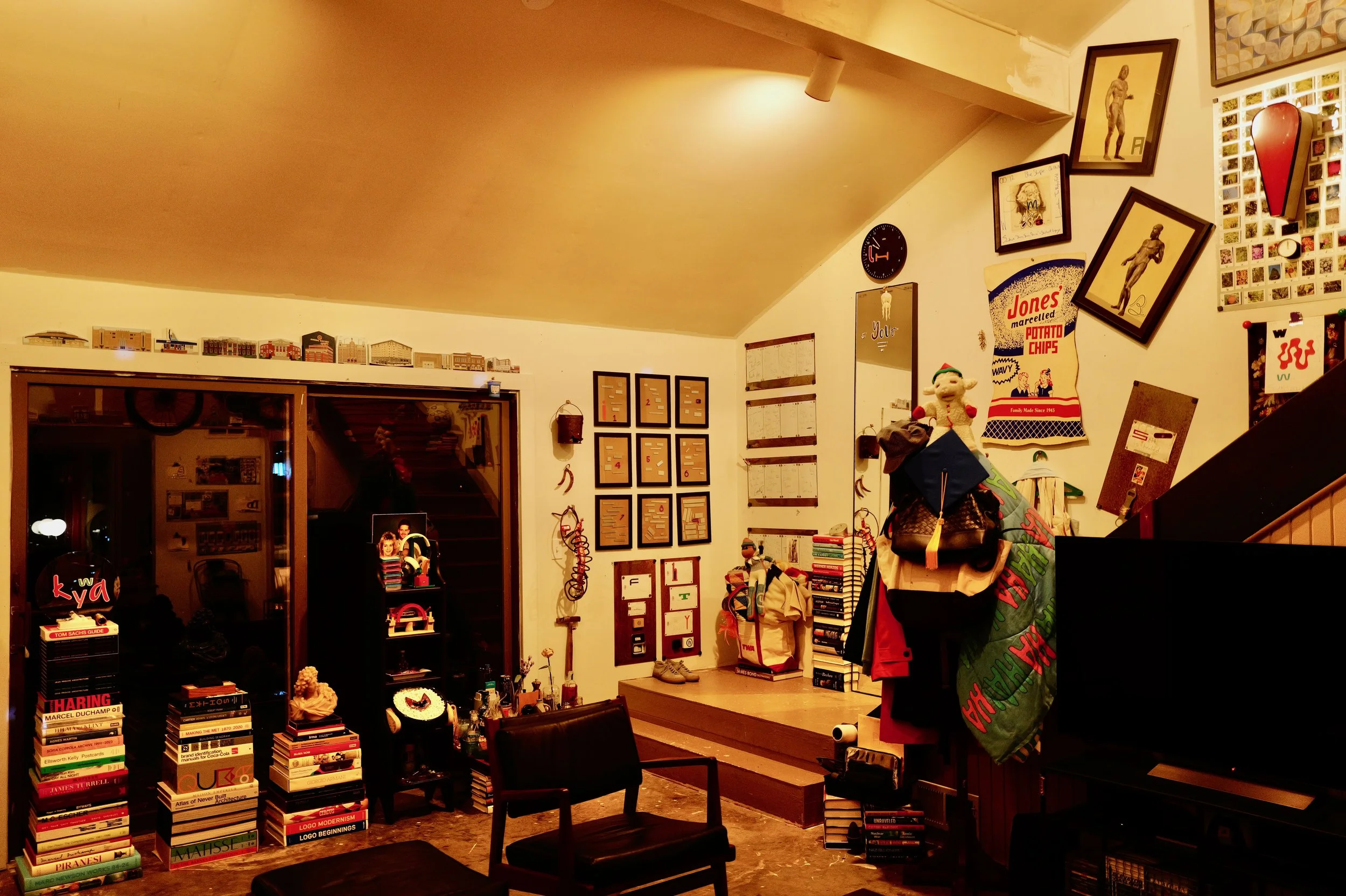
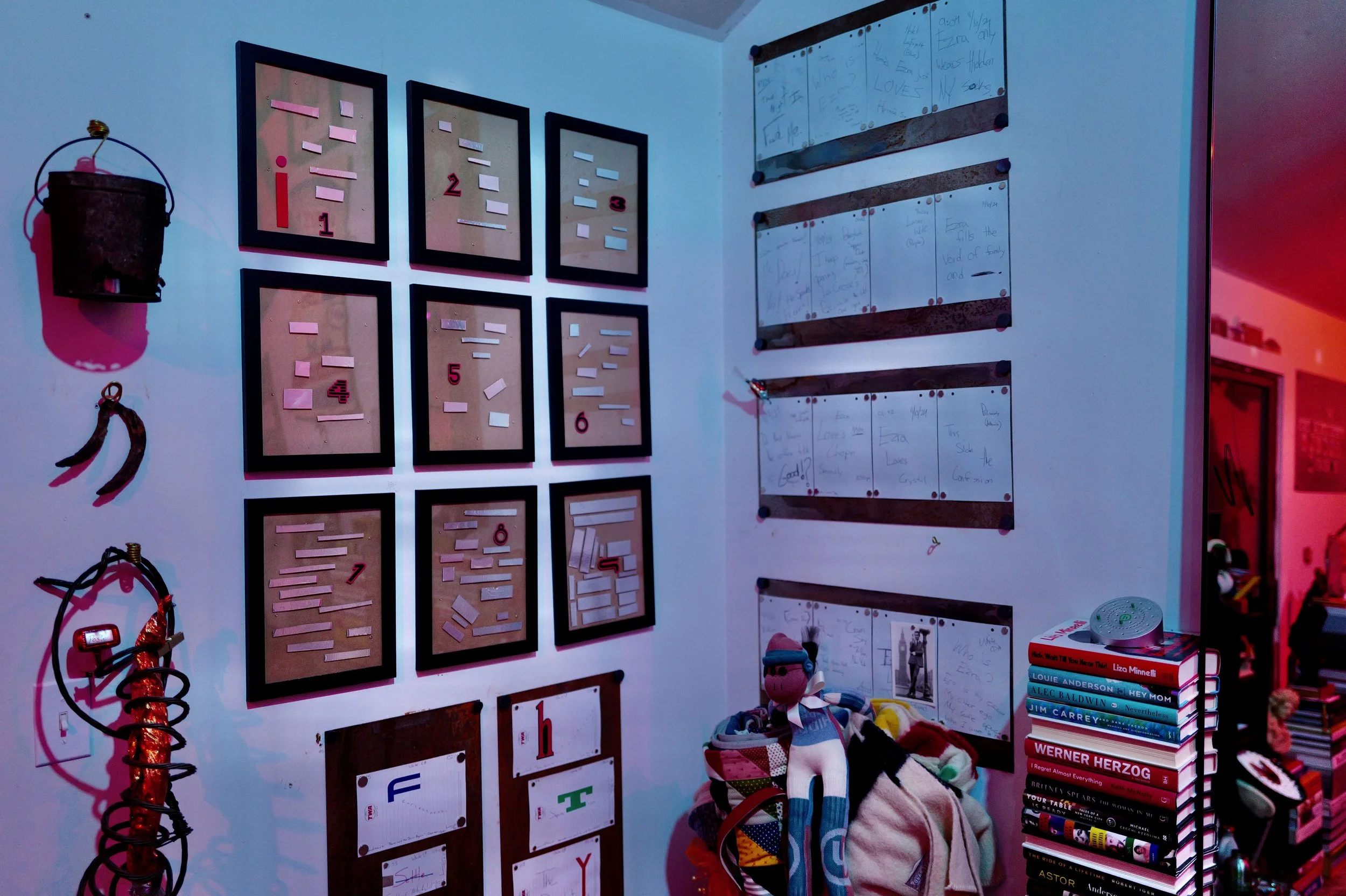
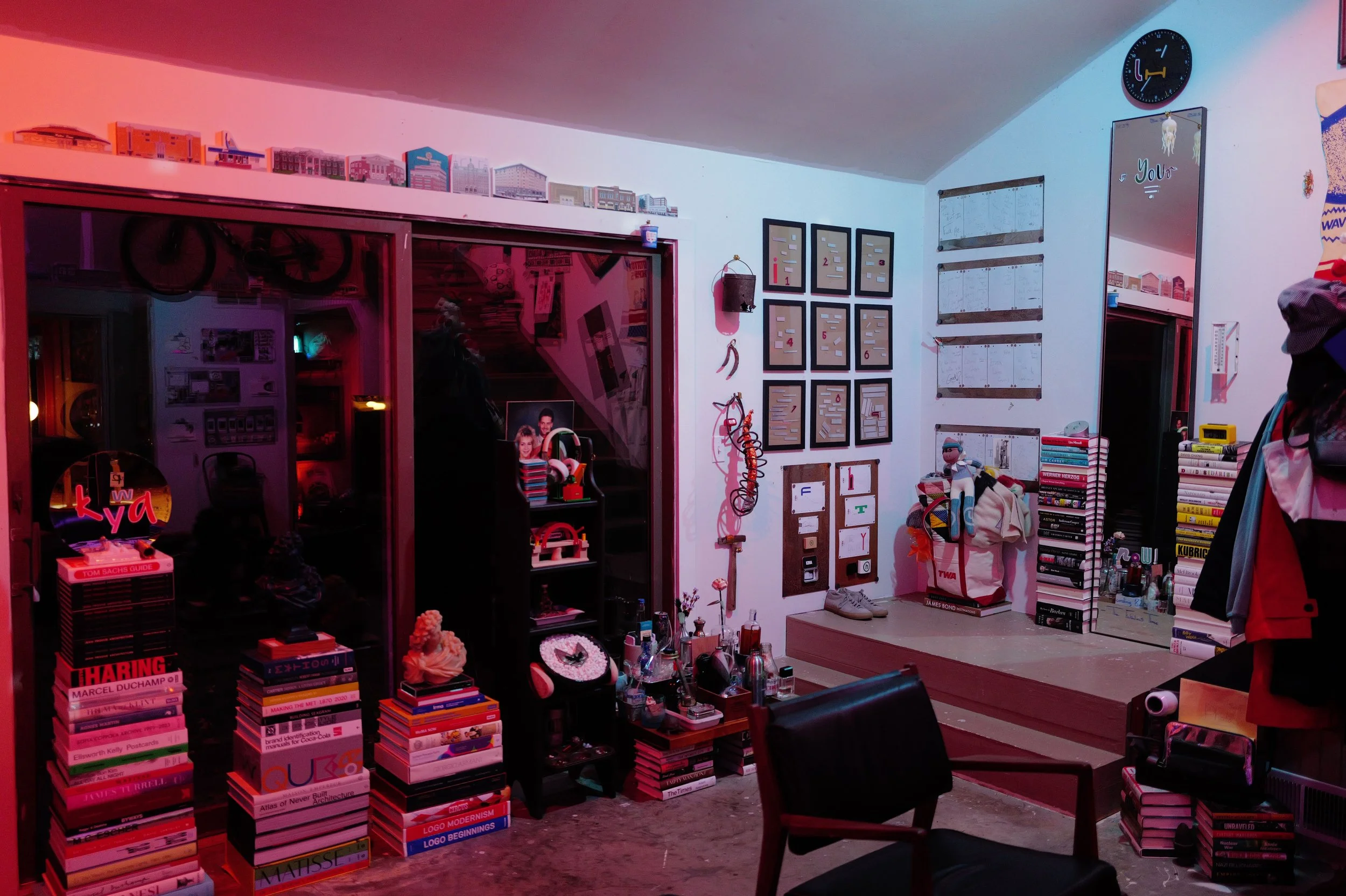
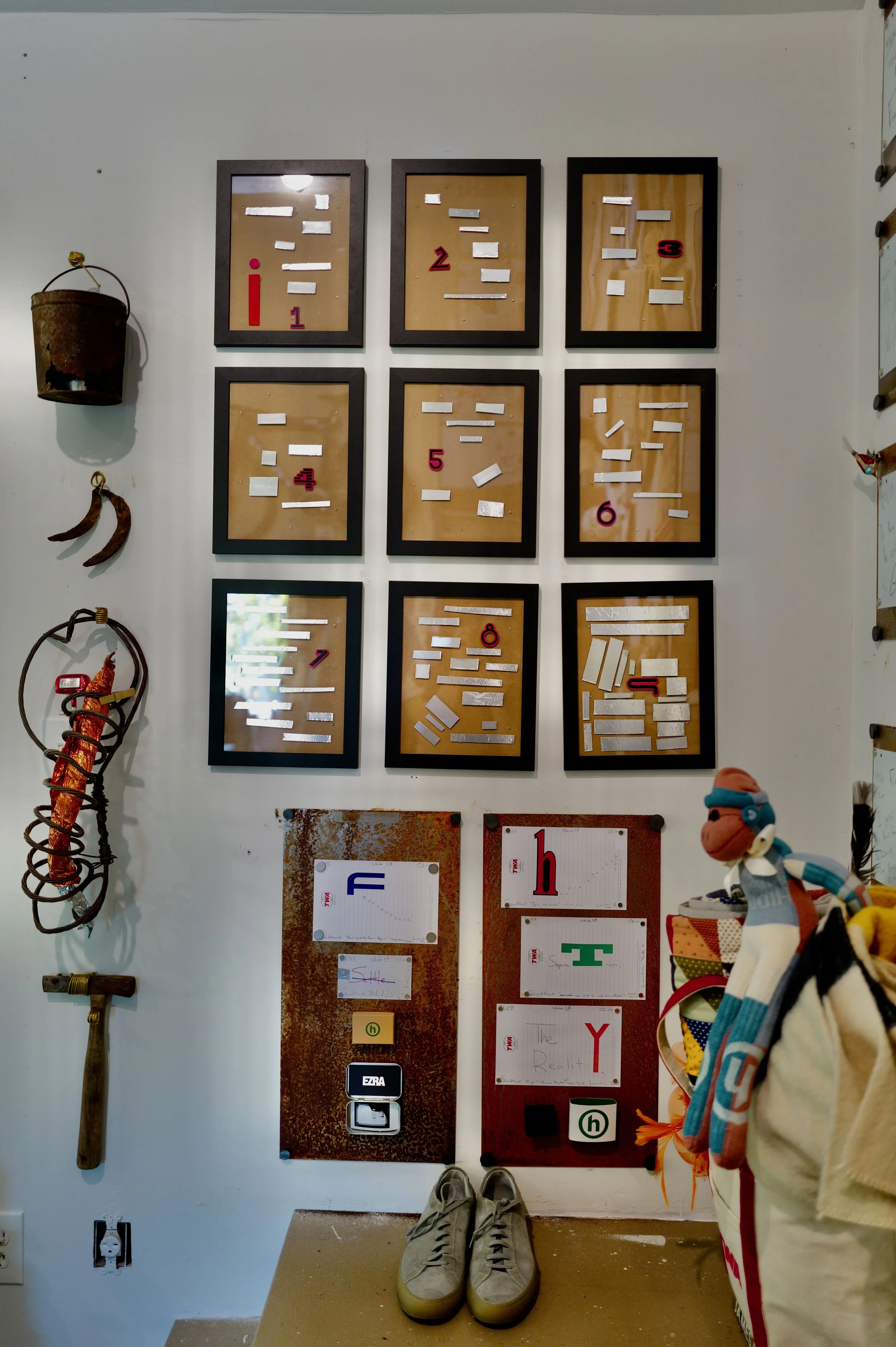
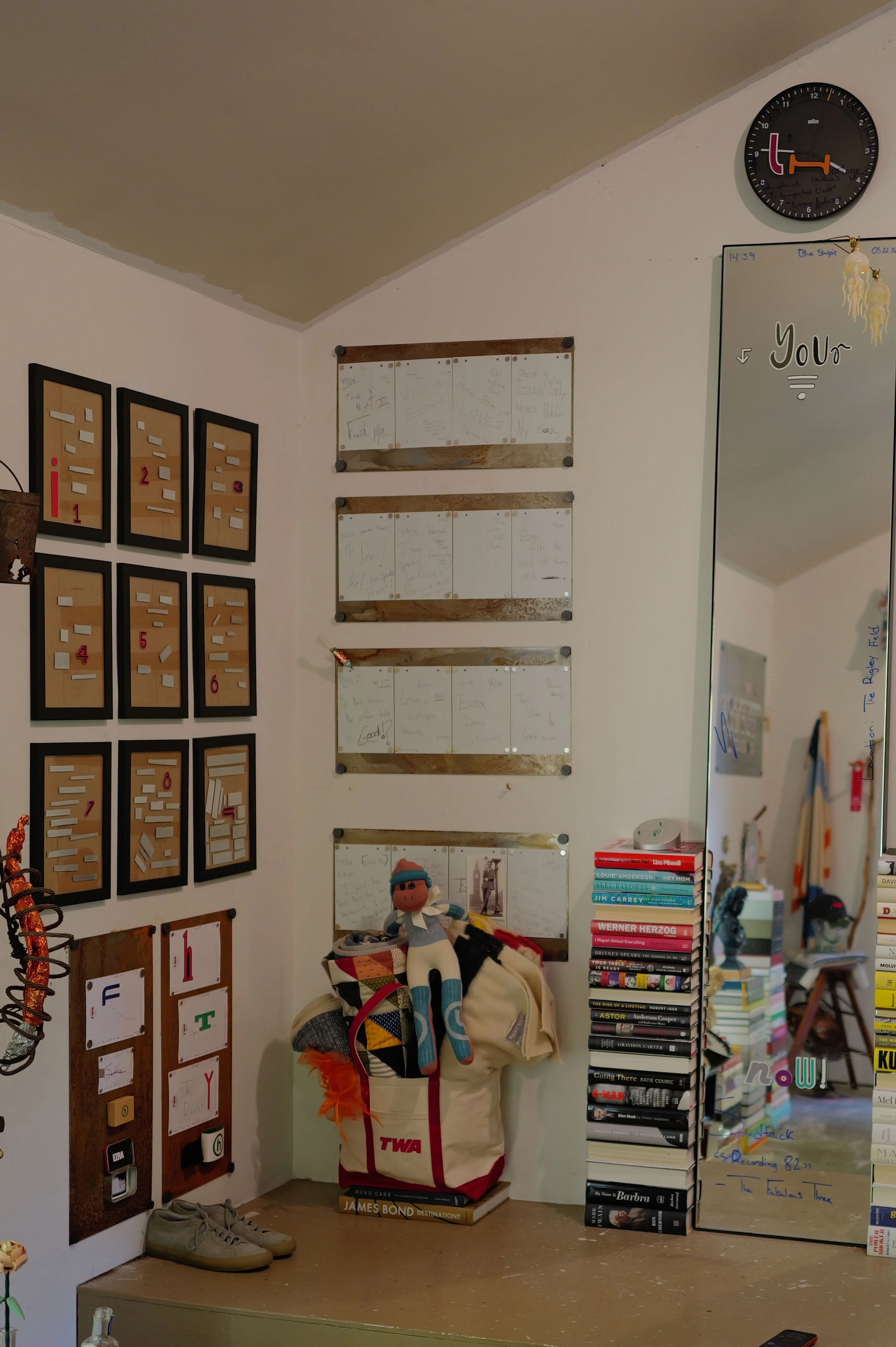
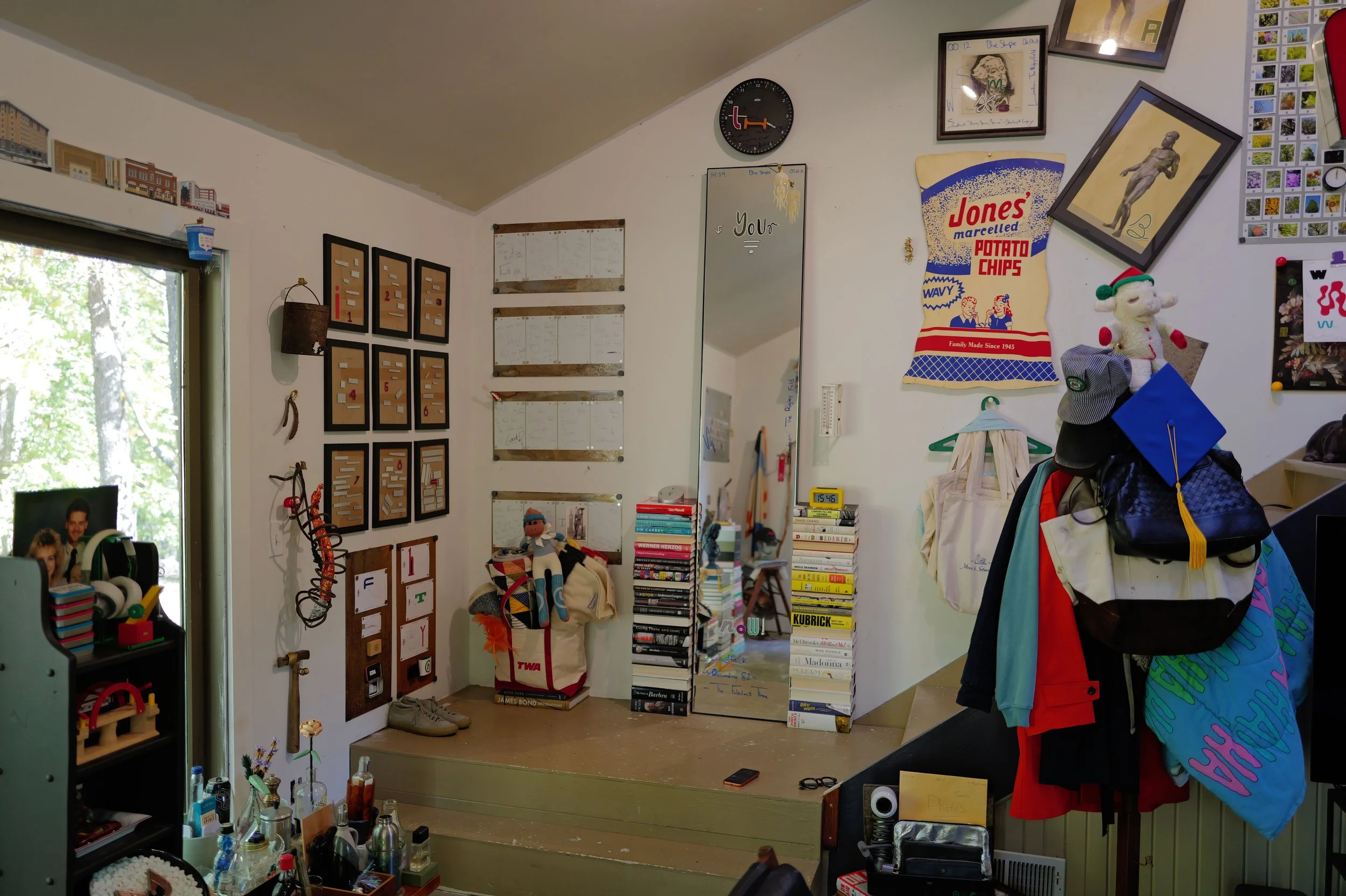
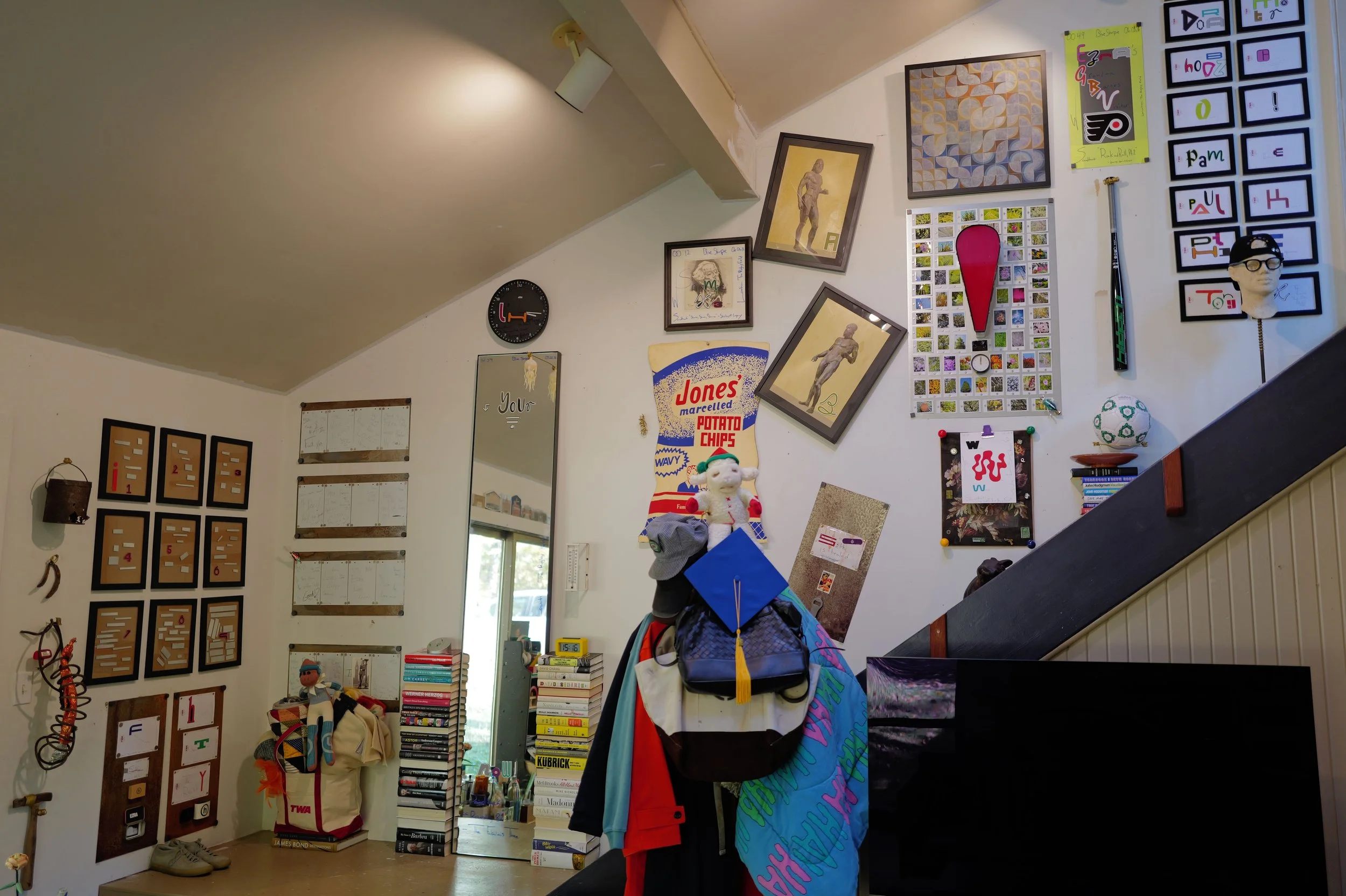
Papers (Served) brings together nine frames and two rusted metal panels to mark the ending of Seth’s marriage and his effort to reclaim authorship over that experience. Begun in December 2025, the assemblage originally displayed papers served to him during the divorce process. Removing those pages later became a defining act within the work: choosing what to preserve, what to put away and how a painful memory would remain present. Together, the frames and panels form an exclamation point, giving an experience that felt outside his control a form he could determine.
Medium: Assemblage
Materials: Nine frames with glass, aluminum tape, Rimowa stickers, two rusted metal panels, five handwritten Data Frames, Hidden NY box and sock sleeve, Altoids tin, Hermès velvet ring bag and magnets
Location: The Rigley Field
Components and arrangement
Nine frames
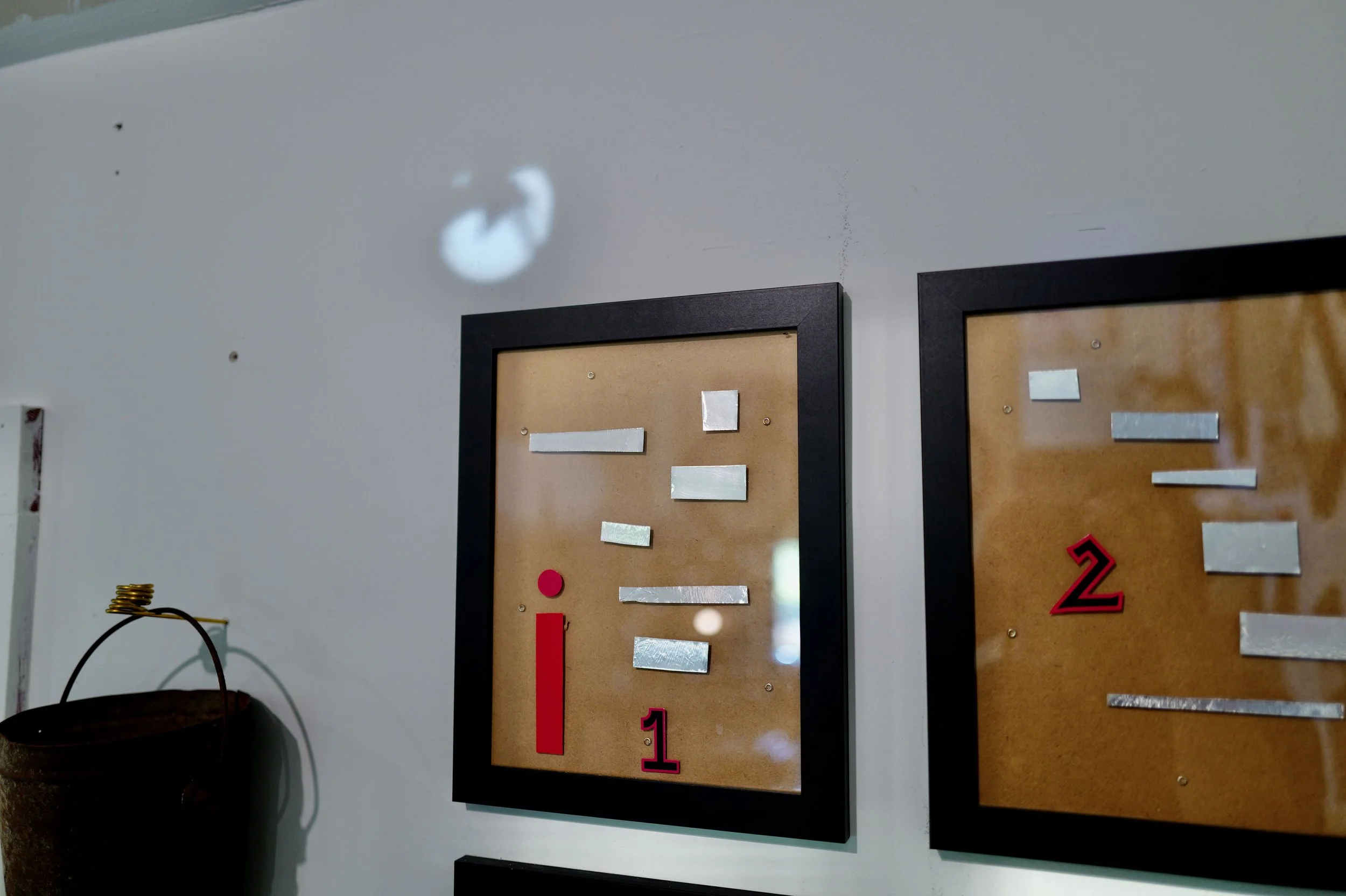
Arranged in a three-by-three grid, the frames originally contained nine predominantly blank pages from the papers served to Seth. Aluminum tape obscured portions of their surfaces, while numbered stickers established their sequence.
In late September 2026, after returning from time away, Seth removed all nine pages and stored them. The frames retain the tape and numbering. Their emptied surfaces leave space for the viewer to imagine what was held there and what its removal might mean.
Fearlessness / Settle.
The left metal panel holds two Data Frames: “Fearlessness” and “Settle.” with the latter crossed out. A Hidden NY box and a magnetically mounted Altoids tin complete an exclamation point within the panel. This side represents Seth’s response to the situation above: finding the courage to act and deciding what he would no longer accept.
Three phases of acceptance
The right panel holds three Data Frames reading “How did it get so bad?”, “The Separation” and “The Reality”, alongside a Hermès velvet ring bag and a Hidden NY sock sleeve. The phrases identify three phases of acceptance Seth experienced before and after being served.
The two panels present different sides of the same experience: his resolve and his process of coming to terms with the marriage’s ending. Together, they form the dot beneath the nine-frame body of the larger exclamation point.
Removal as authorship
Putting the papers away allowed Seth to change how the experience was represented. As in Mother’s Last Show, removing the original paper shifts attention toward the memory and meaning it carries. The documents remain preserved elsewhere; their absence becomes part of the work.
For Seth, the assemblage holds both the pain of an ending and the agency involved in giving it a new form. Choosing what remains visible becomes a way to acknowledge the past while determining how to carry it forward.
Soundtrack: